
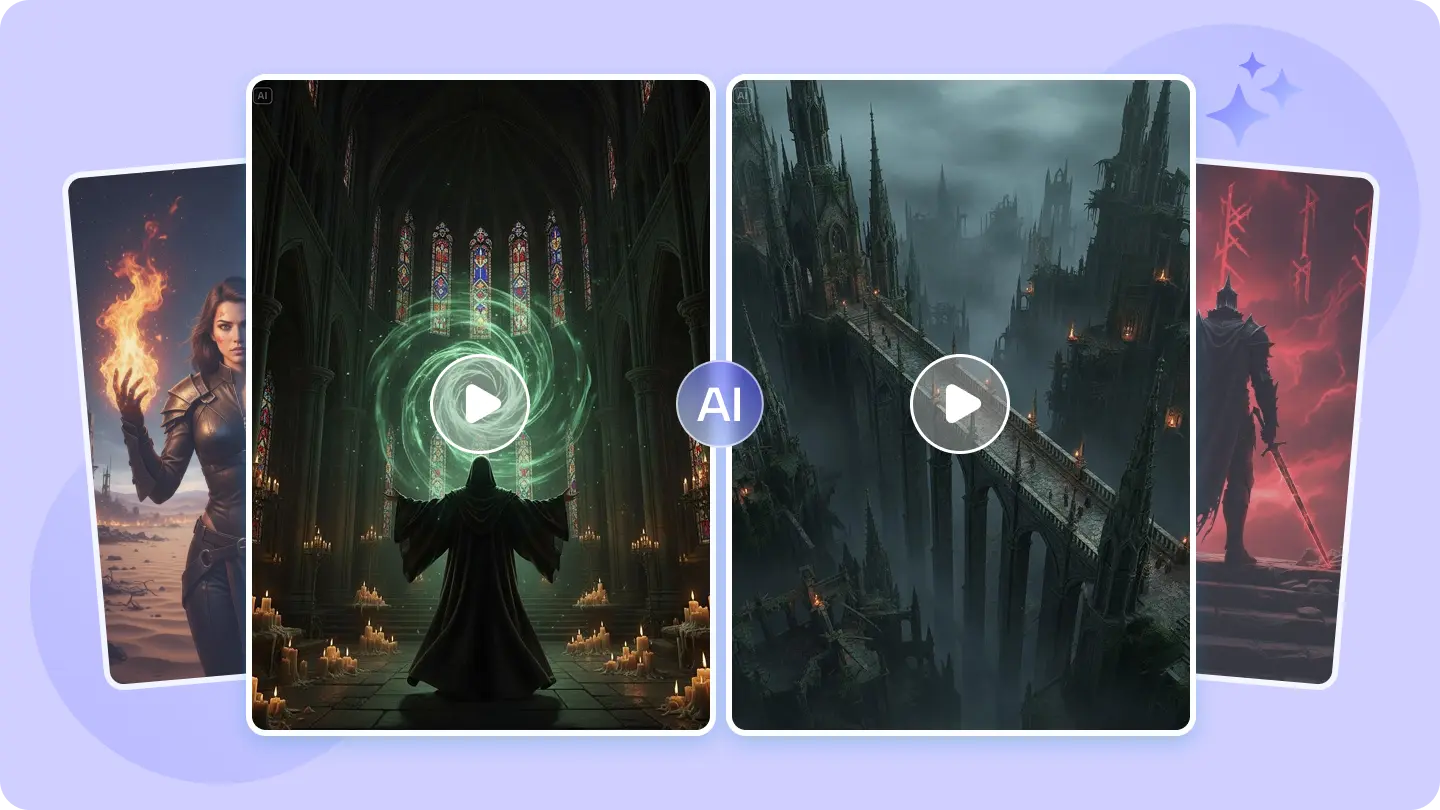

A fantasy writer spends months or years building a world in their imagination — kingdoms, creatures, magic systems, quests that feel absolutely real in their mind. Sharing that internal vision with readers works through prose, but translating it into something visual used to require either a massive budget for animation or acceptance that the world would only ever exist on a page.
Modern text to video generation offers a middle path, allowing a writer’s fantasy world to move from imagination into generated footage that captures the wonder and specificity the writer originally envisioned.
Dreamina’s Seedance 2.5 model was built specifically to understand the demands of fantasy visualization — the internal consistency of imaginary worlds, the specificity of invented creatures and magic, the emotional tone that makes fantasy compelling.
The power of small details in vast worlds
Fantasy worlds that feel real aren’t real because they’re described in massive detail — they’re real because small details reveal thought-out systems underneath. A single detail about how currency works, or how creatures migrate, or what the architecture of a ruined city reveals about its former civilization, communicates that an entire world exists behind what’s visible on screen.
Text to video allows these small details to become visible. A prompt can describe a specific architectural style that reveals cultural values, or dress that indicates social status, or creature behavior that shows adaptation to the environment. These details accumulate and create the sense of a fully realized world.
What makes Seedance 2.5 built for fantasy adventures
Seedance 2.5 was designed to render invented worlds with the internal consistency and visual specificity that makes fantasy feel authentic despite being entirely impossible.
Invented worlds that follow internal logic
The model understands that fantasy worlds have rules, and those rules should be applied consistently throughout generated content. Gravity behaves differently if the world has multiple moons. Magic creates specific visual effects if the magic system is defined. Architecture reflects cultural values and available materials. Consistency within established rules creates believability despite the impossibility.
- Impossible physics remain consistent throughout sequences
- Magic effects follow established system rules
- Architecture reflects cultural and environmental logic
- Creatures behave according to defined ecosystem roles
Creature design with authentic physicality
Motion transfer consistency has improved to over 90%, which matters enormously for fantasy creatures that need to move with convincing weight and authenticity. Invented creatures can be rendered with genuine physical believability rather than stiff or artificial movement.
- Creature movement reflects plausible anatomy and weight
- Flight, swimming, or locomotion physics feel authentic
- Gestures and expressions communicate intelligence or emotion
- Pack or herd behavior shows realistic coordination
Color and light that reinforce magical systems
The model can render light and color that reflect specific magic systems. If magic creates visible auras or changes color based on power level, that can be shown consistently. If certain light sources are magical rather than natural, that distinction becomes visually apparent.
- Magical light behaves distinctly from natural light
- Color shifts reflect magical activity or presence
- Visual effects serve the magic system rather than being arbitrary
- Lighting reinforces the internal rules of the world
Extended duration for adventure unfolding
Single-clip generation extends to 30 seconds, with Ultra-long Video Generation mode reaching 180 seconds. Fantasy adventures often require time to reveal themselves — a journey that progresses through different environments, a conflict that builds gradually, a discovery that unfolds through exploration.
- Adventures can develop at natural pace
- Multiple settings can be explored sequentially
- Conflict builds through progressive revelation
- Viewer understanding grows through duration
From imagination to fantasy footage
Step 1: Describe the fantasy moment with worldbuilding detail
Visit Dreamina, sign in, and head to the “AI Video” section. Ground your fantasy moment in actual worldbuilding — what rules govern this place? What creatures inhabit it? How does magic work here? Click “Add reference image” if you have concept art or visual references. Write a concise prompt describing the adventure moment and its place in your world’s logic.
A prompt might read: An adventurer enters an ancient temple where bioluminescent moss creates shifting blue light, the architecture shows a civilization adapted to perpetual darkness, magical wards still flicker with faint activation, the air carries the weight of centuries undisturbed.
Step 2: Generate your fantasy world with Seedance 2.5
Select the Seedance 2.5 model for generation. Choose 30-60 seconds for adventure moments that need time to develop. Pick 16:9 for cinematic fantasy or 9:16 for social platforms. Click Dreamina’s generation icon and let it bring your imagined world to visual life.
Step 3: Verify the world’s consistency, then export
Use Dreamina’s AI editing tools to sharpen worldbuilding details that make the fantasy feel authentic. Upscale enhances fine details like magical effects or architecture, while Generate Soundtrack adds ambient audio that reinforces the world’s atmosphere. Confirm the generated world stays true to your established rules, then export and share.
Writing fantasy prompts with worldbuilding depth
Effective fantasy prompts describe not just what’s visible but why things exist and how they relate to the larger world. Instead of “a magical forest,” try “an ancient forest where trees glow faintly at night because they’re infused with residual magic from a ritual performed centuries ago, the glow creates navigational markers for nocturnal creatures that have adapted to use this light, the forest canopy is so dense that even daytime is dimly lit, creating a perpetual twilight that shapes the behavior of inhabitants.”
Adventure as journey through worldbuilding
Fantasy adventures work best when the journey through the world becomes the vehicle for revealing how that world works. Rather than external plot imposed on the world, the journey emerges from the world itself. A party travels somewhere because the world’s geography and politics make that journey necessary.
Adventure that honors imagination
The most compelling fantasy content is generated from worlds that have been genuinely thought through, where rules matter and consistency runs deep.
With Dreamina and its Seedance 2.5 model, a fantasy writer’s years of worldbuilding discipline can finally translate into visual form, allowing the adventurous worlds that exist only in imagination to become something viewers can actually see and experience.
