
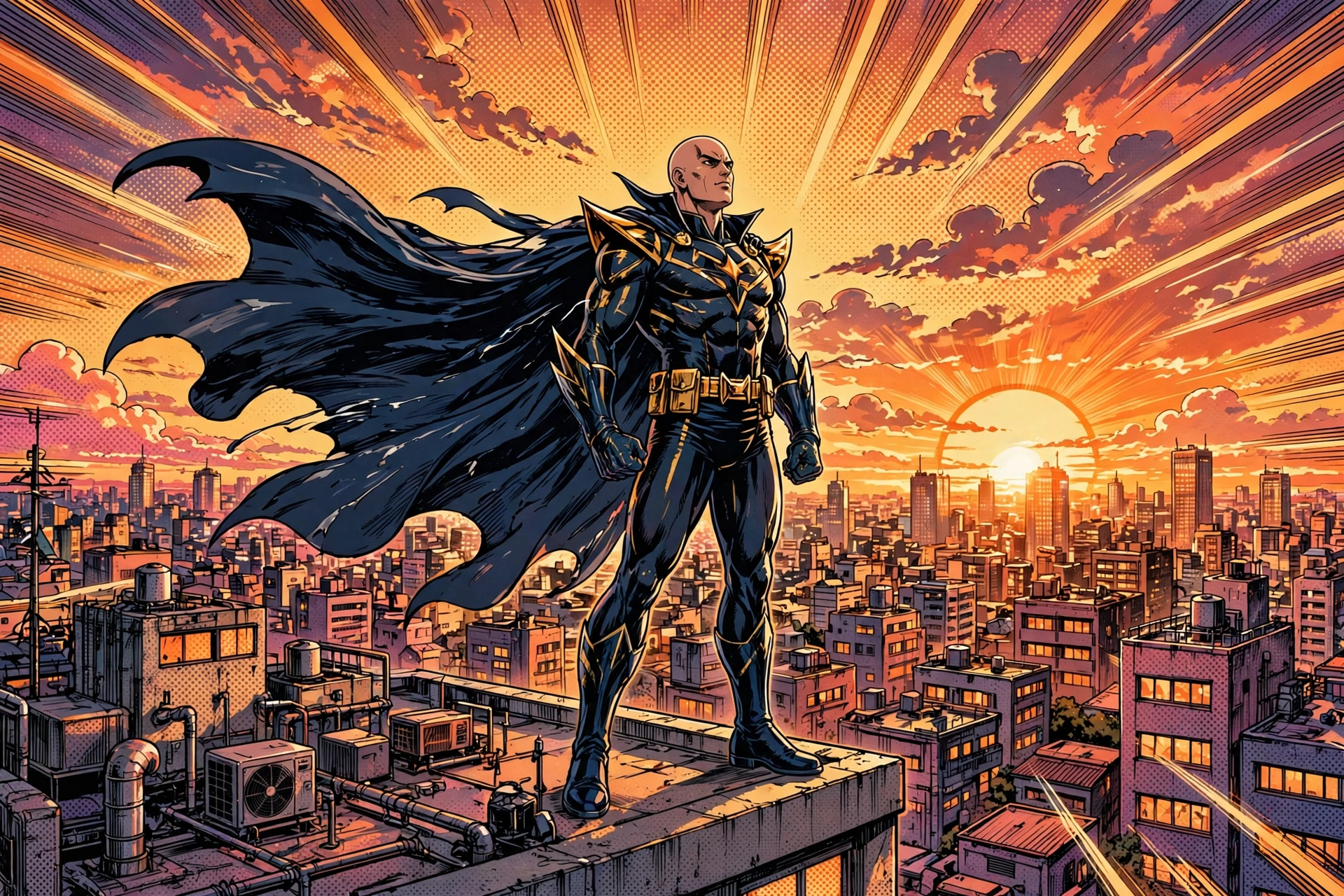

Few manga series have shaken up an entire genre the way the One Punch Man manga has. At its core is one of the simplest premises in all of shonen storytelling: Saitama, an ordinary-looking young man, has become so powerful that he can defeat any enemy with a single punch. That limitless strength should make him the ultimate hero — instead, it has left him bored, unfulfilled, and searching for an opponent who can give him a real fight. It is this brilliant subversion of classic hero tropes that has turned the series into a global phenomenon.
The series began as a webcomic created by the author known as ONE, whose rough but imaginative storytelling quickly earned a devoted online following. The concept was later remade into a lavishly illustrated manga drawn by Yusuke Murata, whose jaw-dropping artwork elevated the series into one of the best-looking manga ever published. This remake version is serialized in the digital magazine Tonari no Young Jump and is the version most readers know and love today.
What makes the One Punch Man manga so compelling is how it balances genuine spectacle with sharp satire. The battle scenes are drawn with an intensity and scale that rival anything in the medium — city-shattering punches, meteor impacts, and clashes that redraw entire skylines. Yet between those moments of destruction, the story pauses to poke fun at superhero bureaucracy, fandom culture, and the very idea of what makes a hero worth following. Saitama himself is rarely the flashy center of the action; he is the deadpan constant at the edge of the frame, waiting for someone to impress him.
The Story of One Punch Man
The One Punch Man manga is set in a world where monsters and supervillains threaten cities on a daily basis, and a massive organization called the Hero Association ranks professional heroes from Class C up to Class S based on their power and achievements. Saitama joins the Association with high hopes of gaining recognition, but his overwhelming power ironically works against him: he defeats world-ending threats in a single blow, often off-panel or while someone else takes the credit. The comedy of the series comes largely from this gap between his godlike strength and his lowly rank in the official hero hierarchy.
Major Arcs to Know
- The Hero Association Introduction Arc — Saitama and his cyborg disciple Genos join the Hero Association, and the ranking system that drives much of the series’ satire is established.
- The House of Evolution Arc — A mad scientist’s engineered beasts test the Association’s heroes, setting up the scale of threats to come.
- The Sea King Arc — A powerful aquatic monster devastates a coastal city, giving Saitama one of his most iconic moments while exposing the Association’s failures.
- The Alien Invasion Arc — A cosmic warlord descends from space with an armada, leading to one of the most visually stunning battles Murata has ever drawn.
- The Monster Association Arc — The series’ longest and most ambitious saga, where a league of monsters challenges the entire Hero Association in an all-out war beneath the surface of a city.
As the story has progressed, the tone has grown more serious in places, exploring themes of obsession, the cost of strength, and what heroism really means when the monsters are gone. Garou, the series’ most complex antagonist, embodies these questions perfectly.
Key Characters Worth Knowing
Saitama
The protagonist, recognizable by his plain yellow jumpsuit, white cape, and bald head. Saitama achieved his power through a famously simple training regimen, and now faces the existential problem of having no worthy challenge left. His deadpan humor and unexpected wisdom make him one of the most beloved shonen protagonists of the modern era.
Genos
A serious young cyborg who witnessed Saitama’s power firsthand and immediately asked to become his disciple. Genos provides much of the series’ dramatic tension — he is genuinely powerful and constantly pushing his limits, yet forever in his master’s shadow. His upgrade-driven character arc contrasts beautifully with Saitama’s effortless strength.
Garou
Introduced as a human villain who hunts heroes, Garou is a former martial arts prodigy obsessed with becoming the ultimate monster. His story arc is widely considered the emotional peak of the series, as his genuine love for monsters and hatred of hero hypocrisy force readers to question the very definitions of good and evil.
Tatsumaki
The S-Class Rank 2 hero, a powerful psychic esper with a notoriously short temper. Tatsumaki’s overwhelming abilities and abrasive personality create some of the funniest and most chaotic interactions in the series, especially whenever she clashes with the mild-mannered Saitama.
Where to Start Reading the One Punch Man Manga
New readers often wonder where to begin. The answer is refreshingly simple: start at chapter one of the Murata-illustrated remake and read straight through. The story is serialized continuously, and the chapters build on each other in a single chronological flow.
- Start with the remake, not the webcomic — The Murata version is the definitive reading experience, with expanded storylines and spectacular art.
- Read in chapter order — The arcs listed above unfold in sequence, and skipping around will spoil major reveals.
- Read through official English sources — Supporting the official release keeps the series going and gives you the best translation quality.
- Consider the companion books — Official databooks and fan books offer extra world-building and character profiles.
For the best experience, read the series through the official English release of the One Punch Man manga, which offers high-quality translations of every volume.

Why the One Punch Man Manga Stands Out
- Unmatched artwork — Yusuke Murata is famous for his obsessive detail, with double-page spreads that fans screenshot and share for years.
- Genre satire with heart — The comedy never undercuts the emotional stakes; when the story gets serious, it genuinely delivers.
- A unique protagonist — Saitama’s boredom with his own power is one of the freshest character concepts in shonen history.
- Escalating scale — Each major arc raises the stakes dramatically, from street-level monsters to cosmic threats.
- Strong supporting cast — Heroes, villains, and civilians alike get real development, making the world feel lived-in.
Anime vs. Manga: Which Should You Watch or Read First?
The anime adaptation is celebrated, particularly its first season, but the manga has long since moved past where the anime currently stands. Reading the manga gives you the complete, ongoing story with all of the Monster Association saga’s most dramatic moments. The anime is a fantastic supplement for the arcs it covers — its animation of the early battles remains legendary — but the manga is the definitive, up-to-date version of the story.
One important note for collectors: the manga chapters are collected into tankobon volumes, and reading via the official digital release is the most convenient way to stay current. Physical volumes look fantastic on a shelf thanks to Murata’s cover art, which is worth seeing even if you primarily read digitally.
Frequently Asked Questions
Who created the One Punch Man manga?
The original concept and webcomic were created by ONE, and the illustrated remake is drawn by Yusuke Murata from ONE’s story.
Is the One Punch Man manga still ongoing?
Yes. The Murata remake continues to serialize new chapters, and the story is still unfolding with new arcs and revelations.
What is the difference between the webcomic and the manga?
The webcomic is ONE’s original rough-drawn version, while the manga is the fully illustrated remake by Yusuke Murata. The remake expands the story with additional scenes, characters, and arcs.
How does Saitama’s power work?
The series keeps this deliberately mysterious. Saitama attributes his strength to a basic daily training routine, but the story treats his power as something that defies explanation — a running joke and a central mystery rolled into one.
Is One Punch Man a parody or a serious story?
Both. It began as a parody of superhero and shonen tropes, but it has grown into a story with real emotional depth, especially around Garou’s arc and Saitama’s search for meaning.
Where can I read the One Punch Man manga legally?
Through official English publishers and licensed digital manga platforms, which release translated chapters and volumes with the creators’ support.
For readers who enjoy smart, character-driven shonen with a twist, the natural next stop is another legendary series — check out our guide to the Hunter x Hunter manga for a very different kind of adventure.
