
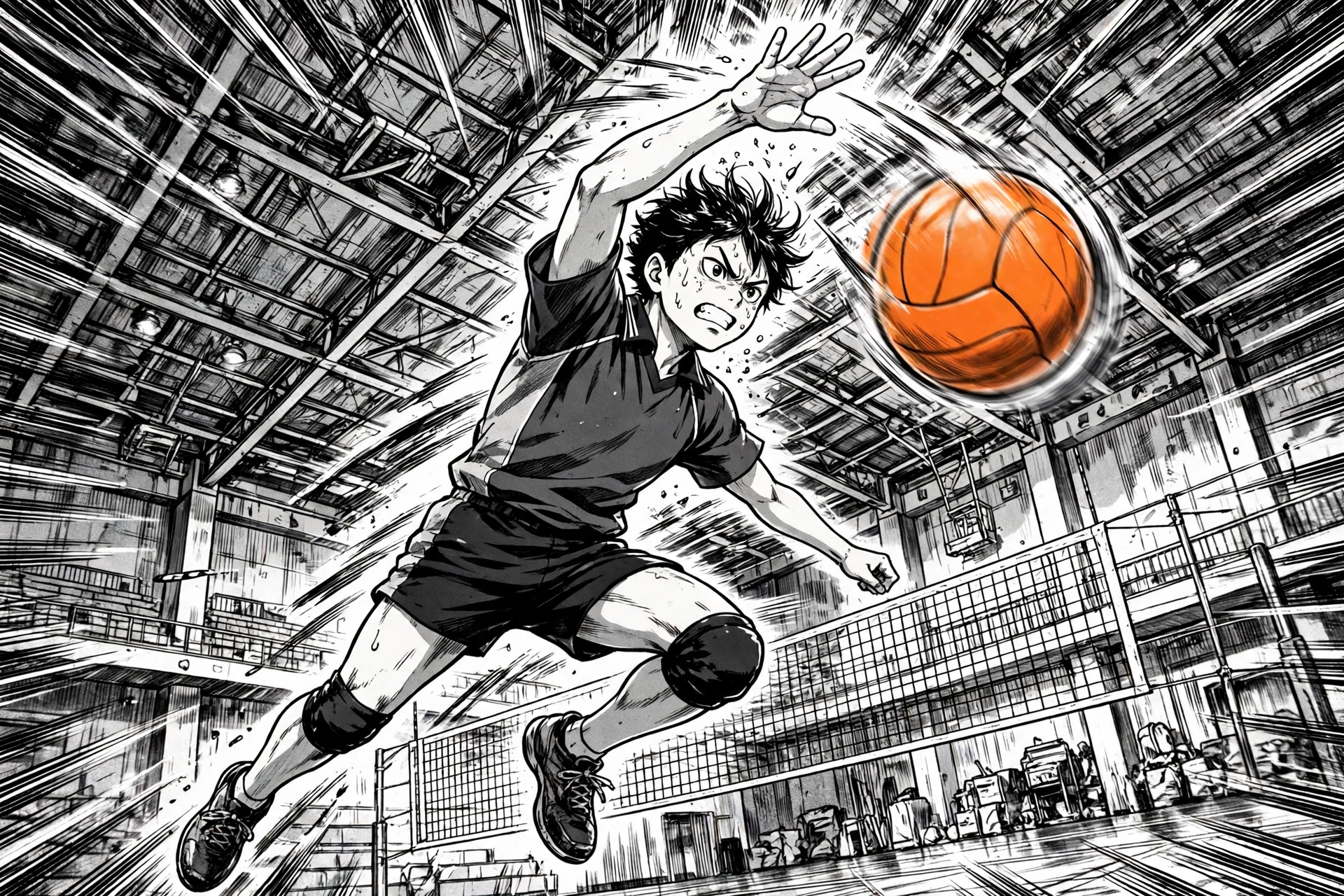

Few sports manga have ever captured the feeling of a live match the way Haikyu!! does. Created by Haruichi Furudate and serialized in Weekly Shonen Jump, this volleyball series follows Shoyo Hinata, a short but explosively athletic middle schooler who dreams of flying above the net like the legendary “Little Giant” he once saw on television. What begins as a one-boy obsession grows into one of the most beloved ensemble stories in manga: a team of flawed, funny, fiercely driven players learning that volleyball, at its best, is a sport you can never play alone.
This guide covers the premise, the main characters, the major story arcs, and the best reading order for the Haikyu manga, so whether you are picking up the series for the first time or returning to Karasuno High after the anime, you know exactly where to start.
The Premise: Small Giant, Big Dream
Shoyo Hinata is not built for volleyball. He is short for the sport, his middle school team barely has enough members to field a side, and his very first official match ends in a crushing defeat against Tobio Kageyama, a genius setter nicknamed the “King of the Court.” Hinata swears he will one day beat Kageyama — and then, in a twist that defines the whole series, the two end up on the same team when they both enroll at Karasuno High School.
Karasuno was once a powerhouse, but by the time Hinata and Kageyama arrive, it is a fallen giant: a proud program with an aging reputation and no recent results. The manga’s central engine is the partnership between the two first-years. Kageyama’s pinpoint sets and Hinata’s freakish jumping ability combine into the “freak quick,” an attack so fast it looks like Hinata is striking the ball out of thin air. Around this impossible duo, Furudate builds a full roster of teammates, rivals, and coaches, each with their own reason for playing.
Unlike many sports series, Haikyu is allergic to shortcuts. Nobody wins through willpower alone. Every victory is earned through practice drills, video study, failed experiments, and the slow, unglamorous work of turning six individuals into one team.
Main Characters
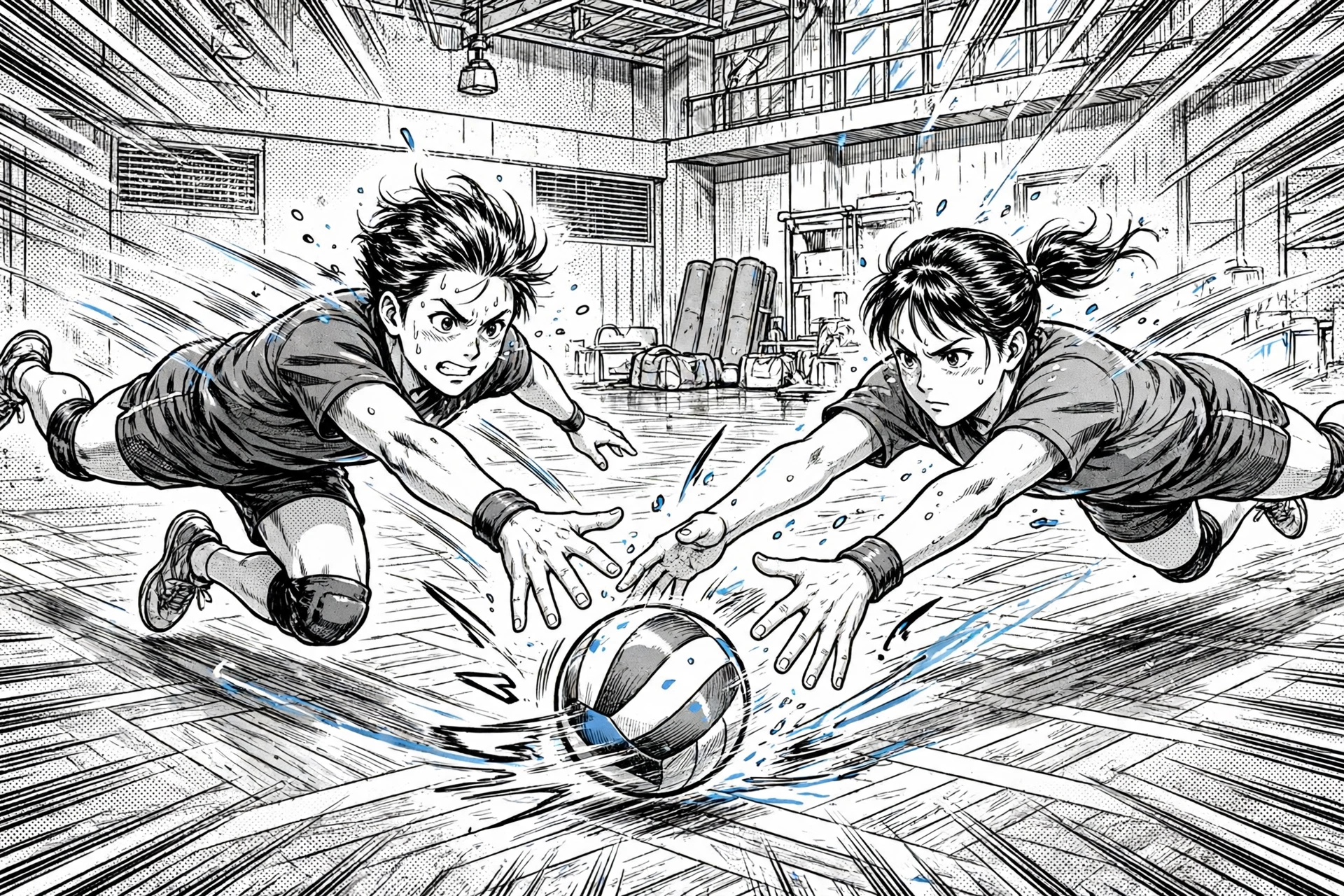
The heart of the series is Karasuno’s roster, but the rival schools are just as richly drawn. Here are the players you will spend the most time with:
- Shoyo Hinata — Karasuno’s middle blocker and the series’ emotional core. Short, loud, and relentlessly optimistic, he makes up for his height with the highest jump on the court and an appetite for improvement that borders on obsession.
- Tobio Kageyama — The genius setter. Technically flawless but socially blunt, Kageyama starts the series alienated from his teammates and slowly learns that a setter’s real job is making everyone around him better.
- Daichi Sawamura — The captain. A steady, reliable outside hitter whose leadership holds Karasuno together when morale cracks.
- Koshi Sugawara — The third-year setter who loses his starting spot to Kageyama and becomes the team’s emotional backbone instead. One of the series’ most quietly beloved characters.
- Asahi Azumane — Karasuno’s ace, a gentle giant who has to rebuild his confidence after being shut down by a rival blocker.
- Yu Nishinoya — The libero, Karasuno’s defensive specialist. Short, loud, and utterly fearless — the “Guardian Deity” of the team.
- Ryunosuke Tanaka — A fiery wing spiker with a soft spot for the team’s manager and a habit of screaming encouragement at exactly the right moment.
- Kei Tsukishima — The tall, sarcastic middle blocker who starts out cynical about volleyball and undergoes one of the manga’s best character arcs.
- Tadashi Yamaguchi — Tsukishima’s loyal friend, a pinch server whose jump float serve becomes a secret weapon.
- Oikawa Tooru — Kageyama’s former senior and the brilliant, charismatic setter of Aoba Johsai. The series’ most complex rival.
- Wakatoshi Ushijima — The overpowering ace of Shiratorizawa and one of the top three spikers in the country.
- Kotaro Bokuto — The emotional, streaky ace of Fukurodani, equal parts comic relief and genuine inspiration.
- Kenma Kozume — Nekoma’s quiet, game-obsessed setter, whose strategic mind makes him Hinata’s destined rival.
Story Arcs in Reading Order
The manga is best read straight through from chapter one, since every arc builds on the last. Here is how the story unfolds:
1. Karasuno’s Formation
Hinata and Kageyama join Karasuno, clash, and are forced to cooperate. The team reunites its missing pieces — Nishinoya returns, Asahi regains his nerve — and qualifies for the Interhigh preliminaries. This opening stretch establishes the series’ thesis: talent means nothing without trust.
2. Tokyo Training Camp and the Interhigh
Karasuno trains with powerhouse Tokyo schools like Nekoma and Fukurodani, absorbing new techniques. The Interhigh tournament then delivers the first great rivalry matches, including the long-awaited showdown with Aoba Johsai and Oikawa.
3. The Spring High Qualifiers
The longest and most intense stretch of the manga. Karasuno fights through the Miyagi prefecture qualifiers against Shiratorizawa and the monstrous Ushijima, earning its ticket to the national Spring High tournament. The matches here are the ones fans still talk about years later.
4. Nationals at the Spring High
The national tournament brings dream matchups: the “Battle at the Garbage Dump” against Nekoma, the chaotic clash with Inarizaki and the Miya twins, and a semifinal run that pushes every Karasuno player past their limits. Furudate’s match choreography peaks here — every rally is readable, tense, and earned.
5. The Final Arc
After the high school story concludes, the manga jumps forward to follow its characters into adulthood and professional volleyball. It is a surprisingly moving coda about what sports give you long after the final whistle, and it lands the series’ themes with rare grace.
Why the Manga Stands Out
Sports manga live or die on their matches, and Haikyu‘s are drawn with unusual clarity. Furudate uses perspective, speed lines, and panel flow to make you feel the ball’s trajectory — you always know where everyone is on the court and why the current rally matters. The art evolves dramatically across the run, from rough early chapters to some of the most dynamic sports illustration in the medium.
Thematically, the series is about more than winning. It asks what it means to be part of something bigger than yourself, how rivals sharpen each other, and why people keep playing a game that will eventually leave them behind. Coaches, managers, parents, and even spectators get moments of depth; nobody in Haikyu is just background.
How to Read the Haikyu Manga
The complete series is available in English through the official publisher, and you can find volume listings, author details, and reading options on the official Haikyu!! manga page at VIZ. If you watched the anime first, the manga continues well past where the anime leaves off, so starting from the beginning still rewards you — the early chapters contain character moments and matches the adaptation had to compress.
A few tips for new readers:
- Start at chapter 1. The anime is faithful, but the manga’s pacing and internal monologues add real depth.
- Don’t skip the training arcs. They look like filler; they are actually where the character development happens.
- Learn the positions. A basic grasp of setter, spiker, libero, and blocker roles makes the matches ten times more exciting.
- Keep going past the first tournament. The series gets better with every arc — most fans agree the Nationals stretch is the peak.
Frequently Asked Questions
Is the Haikyu manga finished?
Yes. The main series completed its serialization in Weekly Shonen Jump in 2020, with the story collected into 45 tankobon volumes. The final arc follows the characters into their adult and professional careers, giving the story a complete ending.
Do I need to watch the anime before reading the manga?
No. The manga is the original work and stands entirely on its own. Many readers actually prefer starting with the manga for its detailed match commentary and extra character scenes.
Who is the main character of Haikyu?
Shoyo Hinata is the protagonist, but the series is a true ensemble. Tobio Kageyama functions as a co-lead, and teammates like Tsukishima, Nishinoya, and Sugawara get full character arcs of their own.
What makes Haikyu different from other sports manga?
Its commitment to realism within the sport — no superpowers, no impossible techniques — combined with unusually clear match artwork and a deep bench of well-written rivals. Every opponent is treated as a protagonist of their own story.
If Haikyu got you hooked on long-running ensemble manga with unforgettable casts, you might also enjoy our guide to the Fairy Tail manga, another beloved series built around the bonds of a found family — this time in a world of wizards and guilds.
