
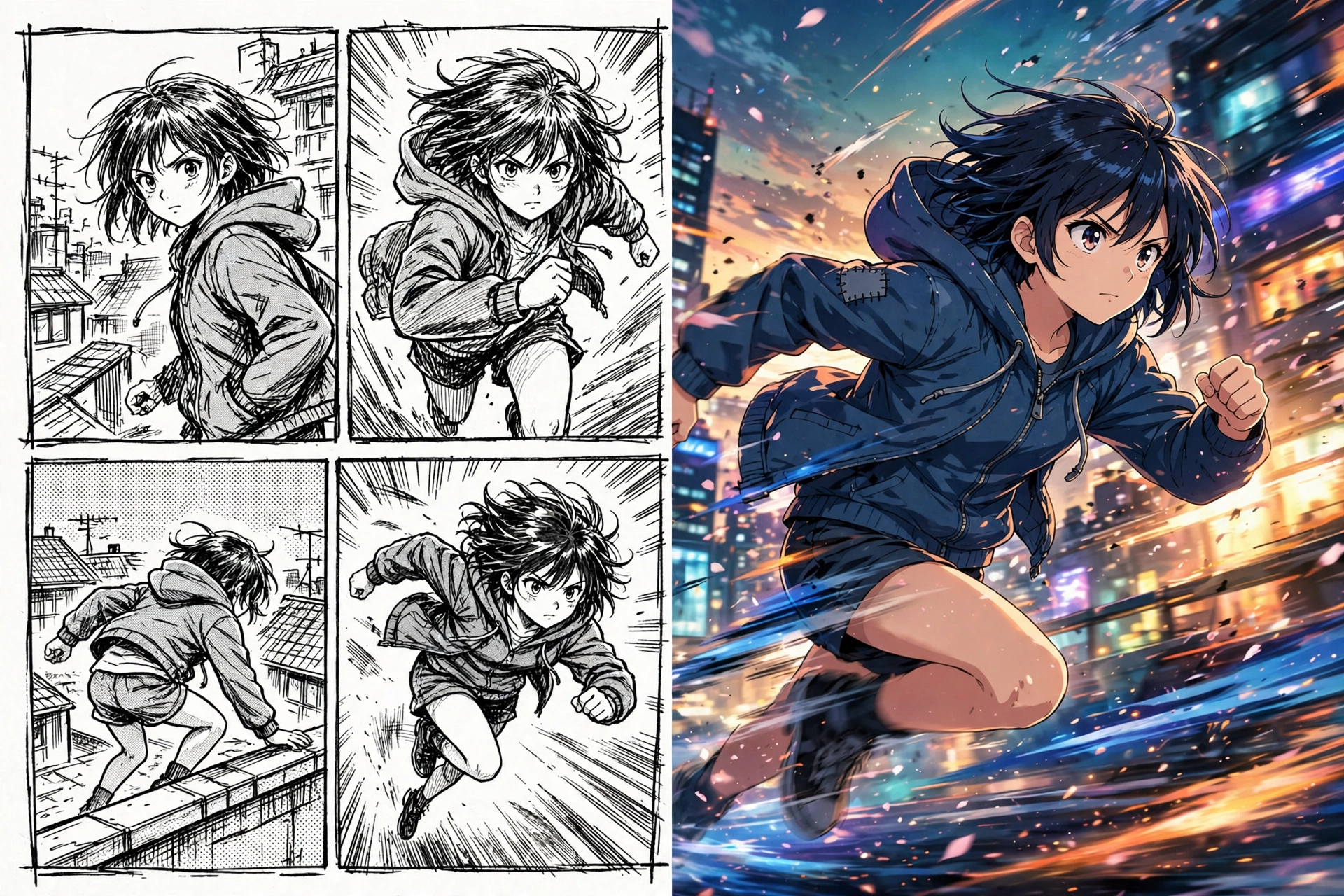

If you are new to Japanese pop culture, “manga vs anime” can feel like a confusing question — are they the same thing? Related? Competitors? The short answer: manga and anime are two different media that often tell the same stories. Manga refers to Japanese comics, usually printed in black and white and read right to left. Anime refers to Japanese animation — TV series, films, and streaming shows. Most anime you love started life as manga.
Understanding the differences between manga and anime helps you decide how to experience a story, why adaptations sometimes change things, and which format fits your lifestyle. This guide breaks down every key difference, from art style and pacing to production costs and creator control.
What Exactly Is Manga?
Manga is sequential art — comics created in Japan, serialized in magazines like Weekly Shonen Jump or published directly as collected volumes (tankobon). A manga series is typically written and drawn by a single creator, the mangaka, often assisted by a small team of assistants. Chapters release weekly or monthly, and readers control the pace: you can linger over a dramatic panel or speed through an action scene.
Manga is usually black and white, which lets artists focus on intricate linework, shading, and expressive character designs. The format is also the industry’s proving ground — nearly every major anime, from Naruto to Demon Slayer to Chainsaw Man, began as a manga that proved itself popular enough to earn an adaptation.
What Exactly Is Anime?
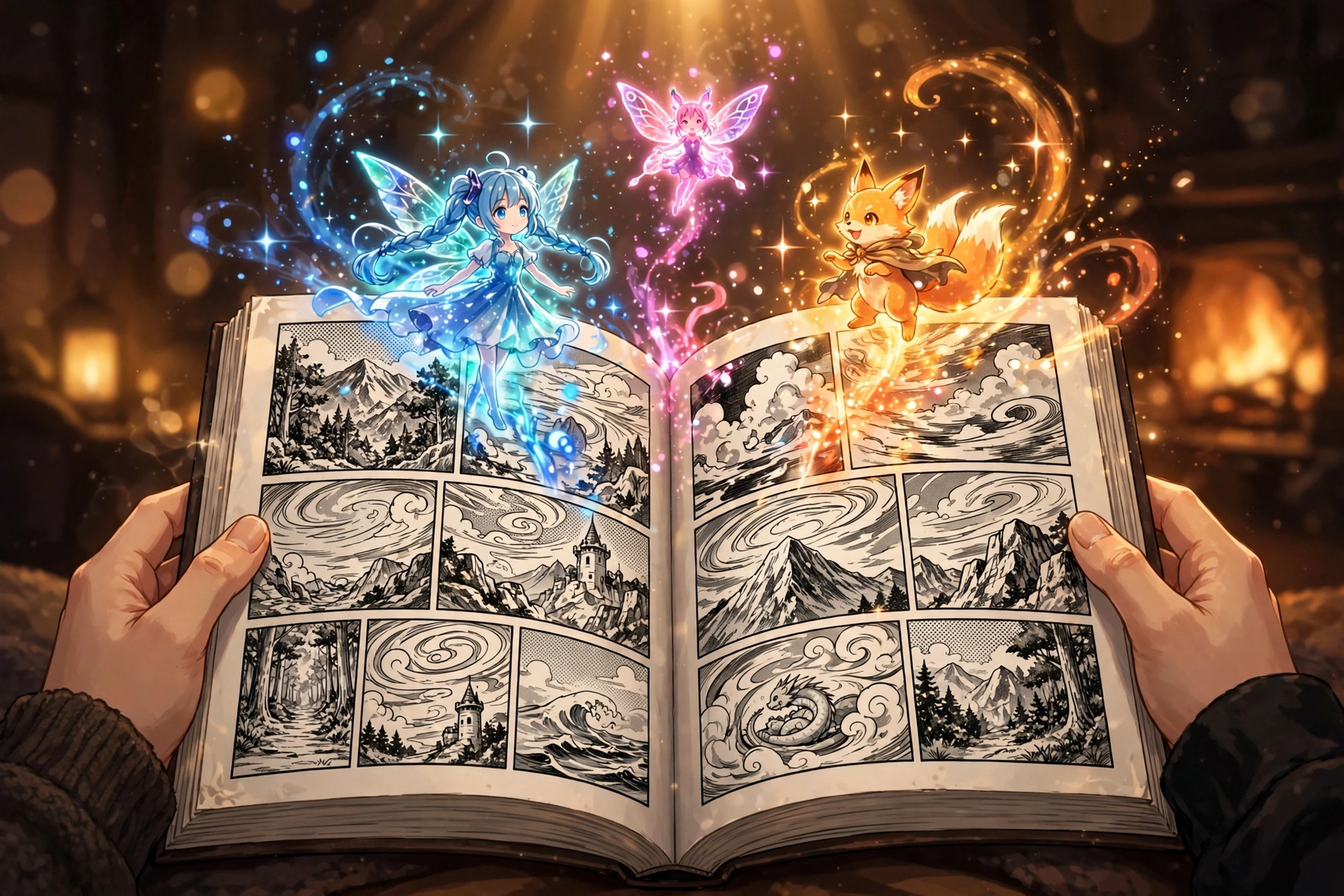
Anime is animation produced in Japan — television series, feature films, and web-streamed shows. Creating anime is a large-scale collaboration: a studio hires directors, storyboard artists, animators, voice actors, composers, and sound designers. A single 13-episode anime season can cost around 250 million yen (roughly $2 million), which is why studios are selective about which manga get adapted.
Anime adds motion, color, voice acting, and music to the source material. A quiet manga panel becomes a fully scored scene; a still image of a battle becomes fluid, kinetic animation. This is why fans describe anime as the manga “brought to life” — though, as we will see, adaptations do not always follow the original faithfully.
Manga vs Anime: 7 Key Differences
1. Format and Medium
Manga is a print and digital comic medium — static panels on a page or screen. Anime is a moving-image medium — frames played in sequence with sound. This single difference drives almost everything else: how stories are paced, how art is designed, and how much each episode or chapter costs to produce.
2. Art Style and Visuals
Manga is overwhelmingly black and white, relying on screentone, cross-hatching, and bold ink work. Artists can pour enormous detail into a single panel because it only needs to exist once. Anime simplifies character designs for consistency — a face must look the same across thousands of frames — and adds color, lighting, and visual effects. Compare a Demon Slayer manga page with the anime: the manga leans on sharp contrast and composition, while the anime adds flowing elemental effects and color gradients.
3. Pacing: Who Controls the Story Speed?
In manga, you control the pace. You can re-read a confusing panel, skip ahead, or stop mid-chapter. In anime, the director controls the pace — scenes play at a fixed speed, and a single manga chapter often stretches across most of an anime episode. This is why anime sometimes adds filler: recap scenes, extended reaction shots, or entirely anime-original episodes designed to let the manga get further ahead.
4. Story Depth and Filler
Because manga is cheaper and faster to produce, it almost always runs ahead of its anime adaptation — and it contains the creator’s unfiltered vision. Anime adaptations sometimes compress storylines, reorder events, or invent filler arcs to avoid catching up to the manga. In rare cases (like the original Fullmetal Alchemist), the anime diverges so far it becomes its own alternate story. If you want the definitive version of a story, the manga is usually the safest bet.
5. Production Scale and Cost
A mangaka with a few assistants can publish a weekly chapter from a small studio. An anime episode requires dozens or hundreds of staff across multiple companies. This cost gap explains why thousands of manga exist but only a fraction become anime — and why anime seasons can take years between releases while manga chapters arrive every week.
6. Creator Control
Mangaka have near-total control over their stories: the plot, the pacing, and the art all come from one vision. Anime is a committee effort — directors, producers, and broadcast standards all shape the final product. This is why purist fans often prefer manga: it is the story exactly as its creator intended, panel by panel.
7. Consumption Experience
Reading manga is private and portable — a volume on the train, chapters on your phone at midnight. Watching anime is more immersive but demands your full attention and a screen with sound. Manga is also typically faster to consume: most readers finish a 20-page chapter in 10–15 minutes, while the equivalent anime episode takes a fixed 24.
Manga vs Anime: Which Should You Choose?
There is no wrong answer — many fans enjoy both. But here is a quick guide:
- Read the manga if: you want the original story first, you hate waiting years between anime seasons, you prefer controlling your own pace, or you want to support the creator most directly.
- Watch the anime if: you love voice acting and soundtracks, you want to see action scenes fully animated, or you find black-and-white art harder to get into.
- Do both if: you finish an anime and cannot wait for the next season — the manga is almost always further ahead. A great place to start is our list of the best isekai manga picks for series that shine in both formats.
Where to Read Manga Legally
The best way to start reading manga is through official channels. VIZ, the leading English publisher of manga, offers free chapters of hit Shonen Jump series like One Piece, My Hero Academia, and Jujutsu Kaisen on its website and app, plus affordable digital volumes. Shueisha’s MANGA Plus platform offers same-day-as-Japan releases for free. Buying official volumes — physical or digital — directly supports the mangaka whose work you love. And if horror is your genre, do not miss our roundup of the best horror manga of all time.
Frequently Asked Questions
Is manga better than anime?
Neither is objectively better — they are different experiences of the same stories. Manga offers the creator’s original vision and moves at your pace; anime adds music, voice acting, and motion. Many fans read the manga for the story and watch the anime for the spectacle.
Do anime adaptations change the manga’s story?
Sometimes. Anime may compress chapters, reorder scenes, or add filler to avoid catching up with the manga. Most adaptations stay broadly faithful, but significant divergences happen — the original Fullmetal Alchemist anime, for example, invented its own ending when it outpaced the manga.
Should I read the manga or watch the anime first?
If you want zero spoilers and the purest experience, start with the manga — it is almost always ahead. If you prefer to be wowed by animation and music first, watch the anime, then pick up the manga where it left off. Either order works.
Is manga read right to left?
Yes. Traditional Japanese manga reads right to left, top to bottom — the reverse of English comics. Official English releases preserve this format, and most readers adjust within a chapter or two. Some publishers flip pages for very young audiences, but right-to-left is the standard.
Can a series be anime-first?
Yes — these are called “original anime.” Series like Cowboy Bebop, Neon Genesis Evangelion, and Code Geass debuted as anime, with manga adaptations coming later. In these cases, the anime is the definitive version.
Why do anime seasons take so long to release?
Animation is expensive and labor-intensive: a single season requires months of work from hundreds of staff, plus voice recording and music production. Studios also wait for the manga to build up enough material for a satisfying season, which is why multi-year gaps are normal.
