
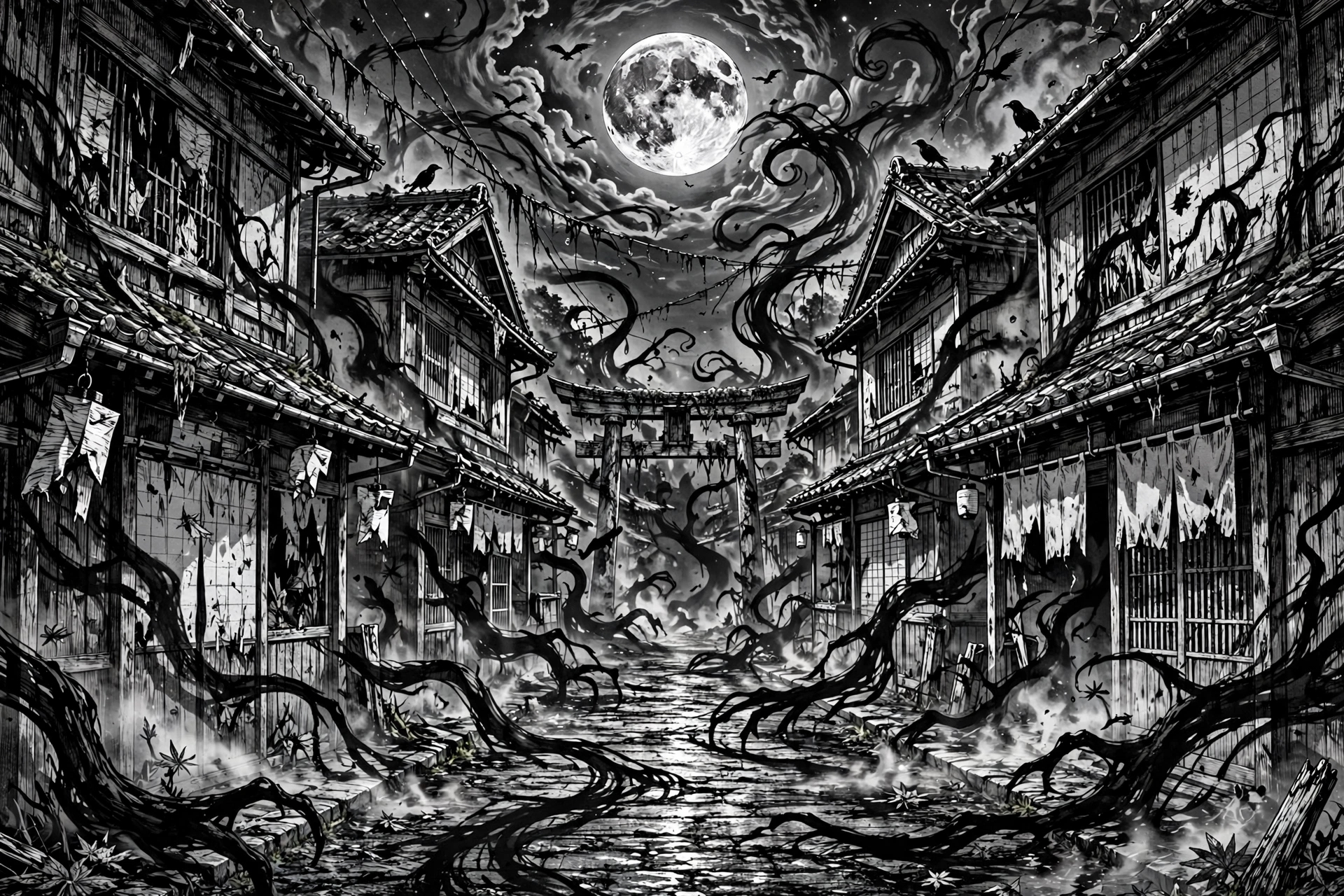

Horror manga occupies a strange and wonderful corner of comics. Freed from the jump scares of film and the budget limits of television, manga horror builds dread one panel at a time — a slow zoom into something wrong, a page turn that reveals the unspeakable. The best horror manga does not just frighten you; it gets under your skin and stays there, resurfacing at 3 a.m. when the house is quiet.
Whether you are a longtime reader looking for your next nightmare or a newcomer wondering where to start, this guide collects the scariest, most essential horror manga ever published. We have focused on series with complete or ongoing official English releases so you can actually read them legally and support the creators.
What Makes Horror Manga So Effective?
Manga has unique tools for terror. The reader controls the pacing — you can linger on a disturbing image or rush past it, and both choices feel awful in the right way. Black-and-white art forces your imagination to fill in the colors of the horror. And the panel-to-panel rhythm lets artists stretch a single moment of dread across an entire page. Masters of the form understand that what you do not see is often worse than what you do.
The 15 Best Horror Manga of All Time
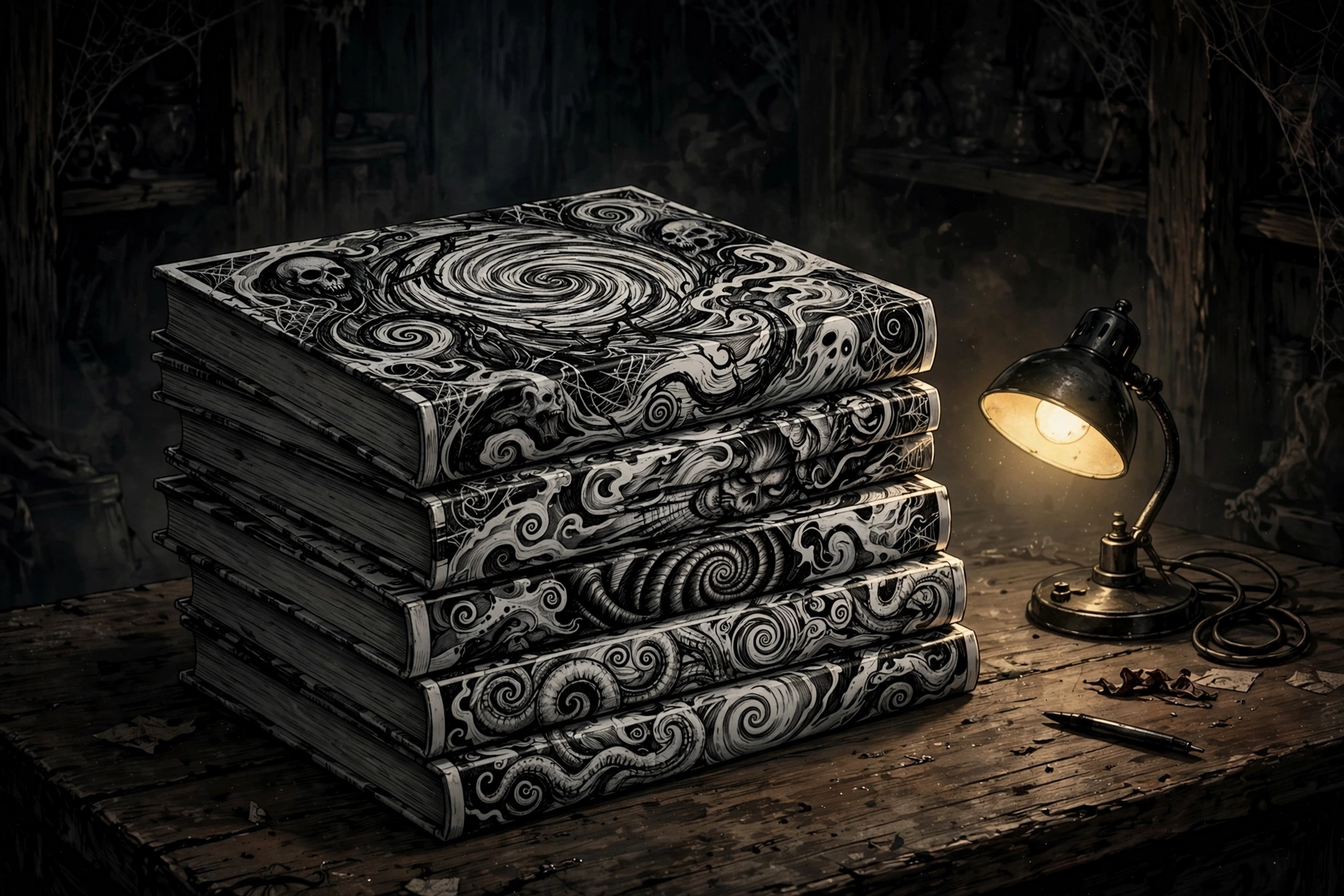
1. Uzumaki by Junji Ito
The undisputed king. A small Japanese town becomes obsessed with spirals — and the obsession turns lethal in ways that escalate from unsettling to cosmically horrifying. Ito’s meticulous art makes the impossible feel real. If you read one horror manga in your life, make it this one.
2. Tomie by Junji Ito
Ito’s immortal femme fatale regenerates from any injury and drives everyone around her to murderous madness. The series spans decades of stories, each one a new variation on beauty, obsession, and body horror. Tomie herself is one of manga’s most iconic monsters.
3. Gyo by Junji Ito
Sharks with mechanical legs walk out of the ocean, powered by a rotting stench called the “death stench.” It sounds absurd; it reads as pure nightmare fuel. Gyo is Ito at his most viscerally disgusting and hardest to put down.
4. The Enigma of Amigara Fault by Junji Ito
A single short story — barely 30 pages — that might be the most efficient horror ever committed to paper. Human-shaped holes appear in a mountainside after an earthquake, and people feel irresistibly drawn to the one shaped exactly like them. Read it and try not to think about it for a week.
5. Berserk by Kentaro Miura
Dark fantasy horror at an operatic scale. Guts, a lone swordsman with a massive blade, battles demons in a world where hope is in short supply. The Eclipse remains one of the most shocking sequences in all of comics. The art is staggeringly detailed, and the dread is existential.
6. Tokyo Ghoul by Sui Ishida
In a Tokyo where flesh-eating ghouls hide among humans, college student Kaneki becomes a half-ghoul and is pulled into their brutal hidden world. Body horror, identity horror, and tragedy intertwine. The manga is darker and more complete than its anime adaptation.
7. Parasyte by Hitoshi Iwaaki
Alien parasites invade Earth by taking over human brains — but one fails and ends up in teenager Shinichi’s hand instead. The result is a tense, philosophical body-horror classic about what it means to be human. A landmark of 90s horror manga that still holds up.
8. The Promised Neverland by Kaiu Shirai and Posuka Demizu
Three brilliant children discover their idyllic orphanage is a farm raising them as food for demons. What follows is a nerve-shredding escape thriller where every chapter ends on a cliffhanger. The horror here is psychological — the slow realization of how trapped they are.
9. Ajin: Demi-Human by Gamon Sakurai
Some humans cannot die — they are “Ajin,” and the government hunts them for experimentation. The series blends action-horror with cold, clinical dread about what people will do to the different. The invisible “black ghosts” are genuinely unnerving.
10. Homunculus by Hideo Yamamoto
A homeless man agrees to an experimental brain surgery called trepanation and gains the ability to see people’s inner traumas as grotesque distortions. Psychological horror that turns inward — the monsters here are guilt, repression, and self-loathing made visible.
11. Franken Fran by Katsuhisa Kigitsu
Episodic mad-science horror with pitch-black comedy. Fran, a stitched-together girl created by a mad professor, “saves” patients with surgeries that go horrifically, hilariously wrong. Not for the squeamish — the body horror is extreme — but unforgettable.
12. I Am a Hero by Kengo Hanazawa
A zombie apocalypse through the eyes of an unreliable, mentally fragile protagonist. The horror works on two levels: the infected are terrifying, but so is the hero’s deteriorating grip on reality. One of the smartest takes on the zombie genre in any medium.
13. The Drifting Classroom by Kazuo Umezu
A classic from the godfather of horror manga. An entire elementary school is transported to a barren wasteland, and the children descend into Lord of the Flies-style chaos. Umezu’s grotesque, expressive art defined Japanese horror manga for generations.
14. Shiver: Junji Ito Selected Stories
If the longer works feel like a commitment, this collection of Ito’s best short stories is the perfect entry point. Each tale is a self-contained nightmare, showcasing the range of his imagination — from cursed houses to living scarecrows.
15. Moan: Junji Ito Story Collection
One of Ito’s newest collections, featuring six stories of creeping dread — including a germophobe mother haunted by groaning pipes and a transfer student surrounded by impossible flowers. It is available officially in English from VIZ, the publisher of Junji Ito’s manga, proving the master of horror manga is still at the top of his game.
Where to Start as a Beginner
New to horror manga? Here is a simple path:
- Start with short stories — The Enigma of Amigara Fault or the Shiver collection. Low commitment, maximum impact.
- Move to Uzumaki — the essential full-length masterpiece.
- Branch by taste — psychological dread (Homunculus), action-horror (Tokyo Ghoul, Berserk), or classic scares (The Drifting Classroom).
- Read legally — official translations support the artists and are better quality than scanlations.
If you are still deciding between formats, our breakdown of manga vs anime explains why horror often works better on the page than on the screen.
Tips for Reading Horror Manga
- Read at night, alone. Horror manga is best experienced the way its artists intended — in the quiet dark.
- Do not rush the art. Ito and Miura hide details in their panels that reward slow reading.
- Take breaks between heavy series. Berserk and Homunculus are emotionally draining; pace yourself.
- Check content warnings. Some titles on this list contain extreme gore, body horror, or disturbing themes. Know your limits.
Frequently Asked Questions
What is the scariest manga ever made?
Most fans and critics point to Uzumaki by Junji Ito. Its slow-burn cosmic dread, iconic imagery, and perfect escalation make it the consensus pick for the scariest manga of all time.
Is horror manga appropriate for teenagers?
It depends on the title. Series like The Promised Neverland are fine for older teens, while Berserk, Franken Fran, and Gyo contain extreme gore and adult themes meant strictly for mature readers. Always check age ratings.
Where can I read horror manga legally?
Official English releases are available through publishers like VIZ Media, Kodansha, and Yen Press, sold via bookstores and digital platforms. Many libraries also carry manga collections — a free and legal way to explore.
Why is Junji Ito so popular?
Ito combines meticulous, realistic art with surreal, uncanny concepts. His horror taps into universal fears — body transformation, the uncanny, cosmic insignificance — and his panel composition creates dread that few artists can match.
Is the manga scarier than the anime adaptation?
Usually, yes. Horror manga lets you control the pacing and forces your imagination to do the heavy lifting. Anime adaptations often rush the slow-burn dread that makes the manga effective, though there are exceptions.
The best horror manga reminds us why we seek out fear in fiction: to feel something intense in a safe space, and to marvel at what human imagination can conjure from ink and paper. Start with Ito, follow your curiosity, and keep a light on — just in case.
