
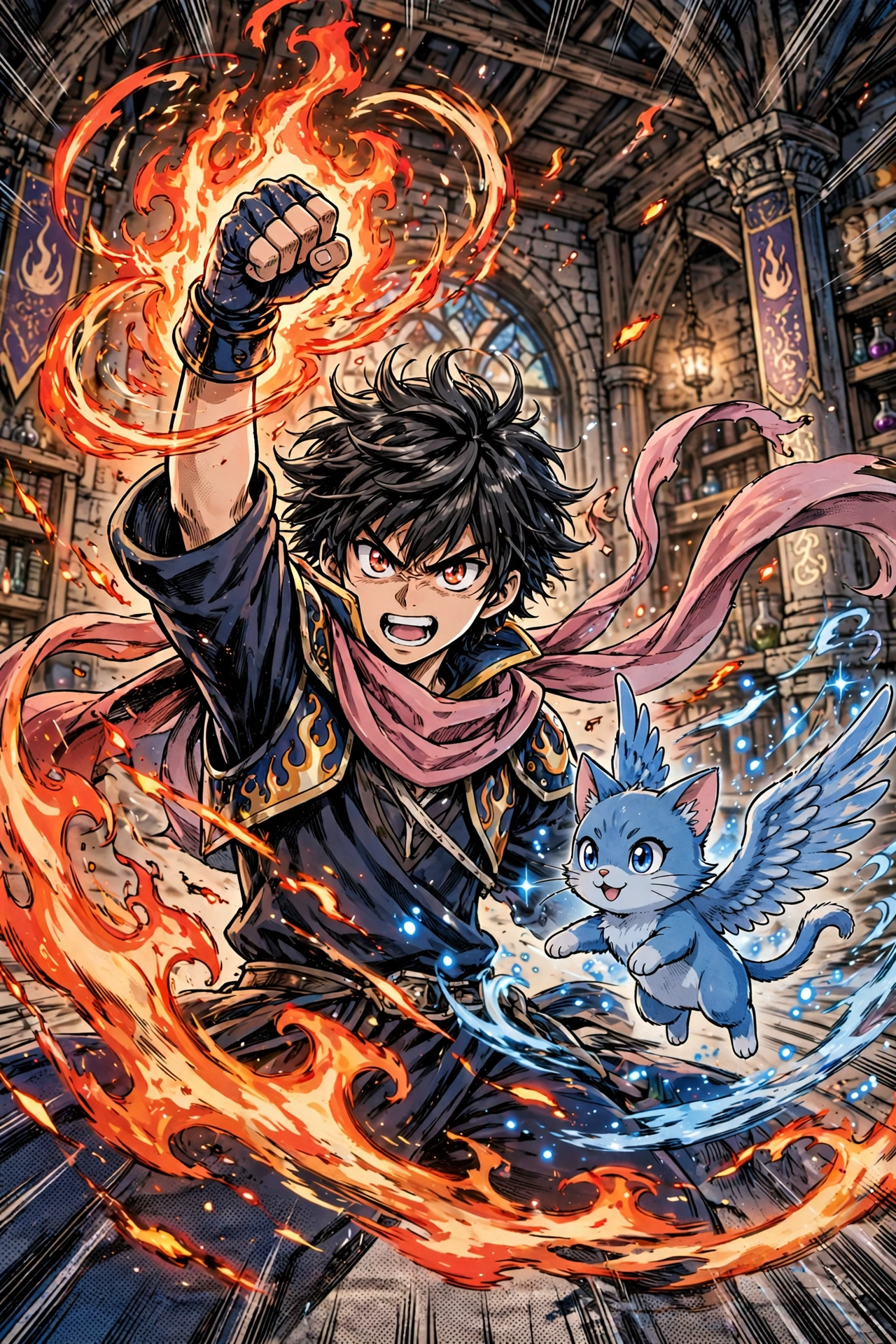

For more than a decade, Fairy Tail was one of the defining adventure manga of its generation: a loud, warm-hearted fantasy about wizards, dragons, and the guild that feels like home. Written and illustrated by Hiro Mashima and serialized in Weekly Shonen Magazine from 2006 to 2017, the series collected into 63 tankobon volumes spanning 545 chapters — a complete, self-contained epic that new readers can now enjoy from beginning to end without waiting for the next installment.
This guide walks through the premise, the main characters, the major story arcs, and the recommended reading order for the Fairy Tail manga, plus where the sequel and spin-offs fit in.
The Premise: Wizards for Hire
The story is set in Earth-land, a world where magic is a trade and wizards join guilds to take on paid jobs — from monster extermination to bodyguard work. The most infamous guild of all is Fairy Tail, based in the town of Magnolia in the Kingdom of Fiore: rowdy, destructive, fiercely loyal, and home to some of the strongest mages alive.
The adventure begins when Lucy Heartfilia, a runaway celestial wizard who summons spirits through magical keys, meets Natsu Dragneel — a fire-breathing Dragon Slayer raised by a dragon, traveling with his talking blue cat companion, Happy. Natsu invites Lucy to join Fairy Tail, and the two form a team that gradually grows to include ice wizard Gray Fullbuster, the armored knight Erza Scarlet, and later the young Dragon Slayer Wendy Marvell and her companion Carla. What starts as a string of guild missions escalates into battles against dark guilds, ancient demons, and forces that threaten the entire continent.
Main Characters
Fairy Tail‘s cast is enormous, but these are the characters at the center of the story:
- Natsu Dragneel — The protagonist. A Dragon Slayer who wields fire magic, raised by the dragon Igneel, whom he has been searching for since childhood. Reckless, loyal to a fault, and famous for never giving up no matter the odds.
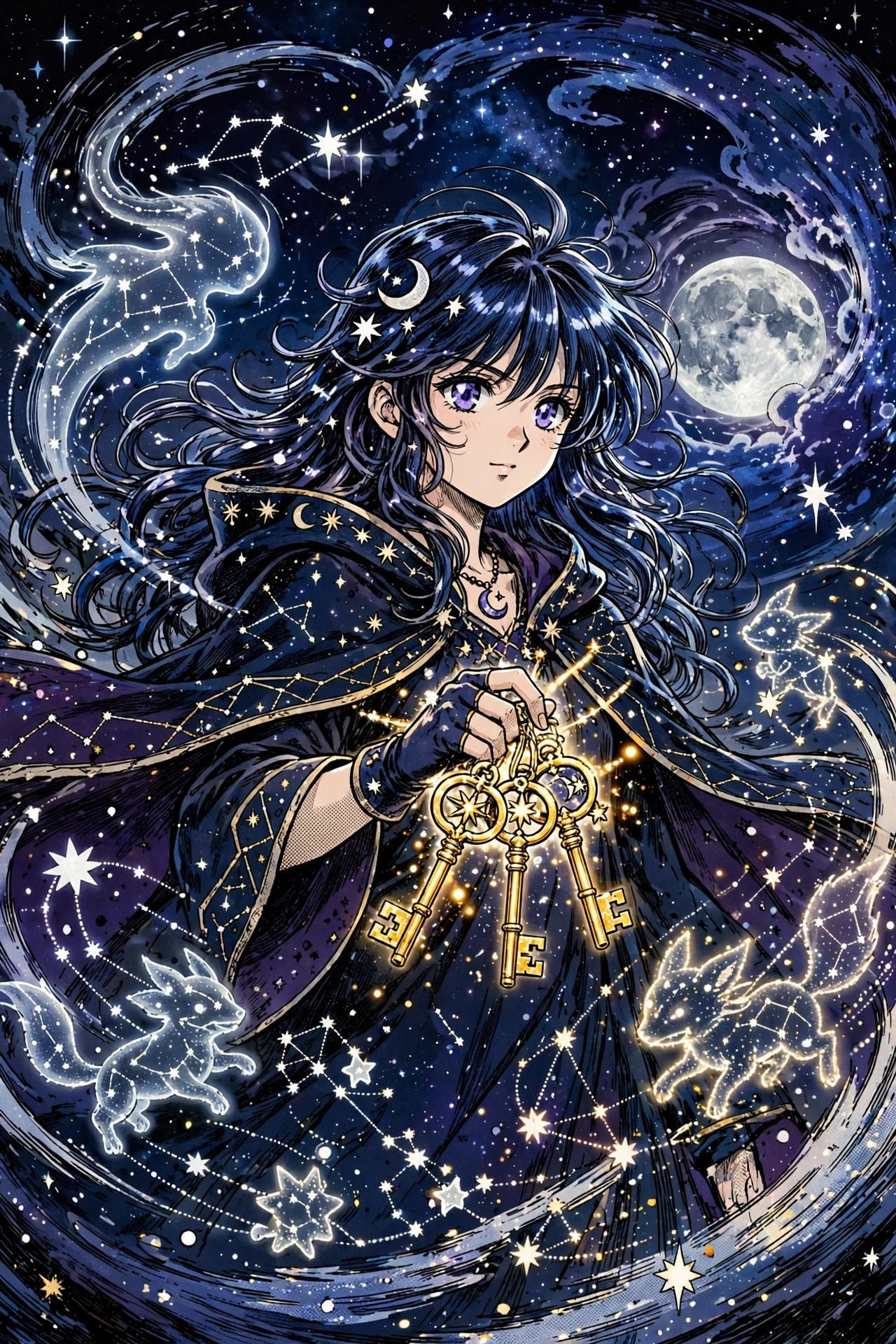
- Lucy Heartfilia — A celestial wizard and the reader’s entry point into the world. She fights by summoning zodiac spirits with her gate keys and grows from a novice into one of the guild’s most resourceful mages.
- Happy — Natsu’s blue, winged Exceed companion. Comic relief with a surprisingly big heart, and one of the most recognizable mascot characters in manga.
- Gray Fullbuster — An ice-make wizard with a tragic past and a habit of stripping (a running gag the series never lets die). His rivalry with Natsu — fire versus ice — drives some of the best fights in the manga.
- Erza Scarlet — “Titania,” the guild’s strongest female wizard. A disciplined knight who can re-equip magical armor and weapons mid-battle, and the team’s unshakable moral center.
- Wendy Marvell — A gentle young Dragon Slayer of the sky, joined later in the story along with her Exceed partner Carla. Her healing and support magic make her indispensable.
- Makarov Dreyar — The guild master: tiny, gruff, and willing to go to war for any member of his “family.”
- Zeref — The black wizard whose curse and ancient creations loom over the entire story, connecting the guild’s past to its final battle.
- Acnologia — The black dragon, a calamity-level threat whose shadow stretches across the series’ biggest arcs.
Magic in the World of Fairy Tail
Magic in Earth-land generally falls into two types. Caster magic comes from within the user’s own body — Natsu’s fire, Gray’s ice-make, Erza’s requip. Holder magic requires an external item, like Lucy’s celestial keys. Dragon Slayer magic, a rare “lost magic,” lets its users take on the traits of dragons: Natsu can eat fire to restore his own power, which leads to some of the series’ most creative fight choreography.
Major Story Arcs
Read in publication order, the arcs trace a clear escalation from local adventures to world-ending stakes:
Early Adventures
The opening volumes establish the guild through standalone missions — the Galuna Island job, the clash with the rival guild Phantom Lord — while introducing the core team dynamic: loud, chaotic, and bonded by shared trouble.
Tower of Heaven and the Fighting Festival
Erza’s dark past resurfaces at the Tower of Heaven, delivering the first genuinely emotional gut-punch of the series. The internal Fighting Festival arc then turns the guild against itself in a battle royale that deepens nearly every supporting character.
Tenrou Island
The guild’s S-Class trial on sacred Tenrou Island collides with the dark guild Grimoire Heart and the dragon Acnologia. The arc ends with a time skip that reshapes the status quo and sets up everything that follows.
Grand Magic Games
A tournament arc done right: Fairy Tail, returning after seven lost years, must prove itself against the kingdom’s top guilds in a multi-day magical competition. New rivals, spectacular set-piece battles, and one of the best ensemble stretches in the manga.
Tartaros and Alvarez
The final stretch. Tartaros, a dark guild of demons created by Zeref, forces the guild to disband and rebuild. Then the Alvarez Empire — a military nation ruled by Zeref himself — invades Fiore, leading to an all-out war that resolves the manga’s longest-running mysteries: Natsu’s true identity, Zeref’s curse, and the fate of the dragons.
Reading Order and Sequels
The main series reads straight through, volumes 1 to 63, with no filler arcs to skip — everything Mashima wrote is canon. After finishing, the wider Fairy Tail universe continues in a few official follow-ups:
- Fairy Tail Zero — A prequel miniseries about the guild’s founding and its first master, Mavis. Best read after the main series, though it can be enjoyed on its own.
- Fairy Tail: 100 Years Quest — The official sequel, storyboarded by Mashima with art by Atsuo Ueda, following Natsu’s team on the legendary century-old mission teased at the end of the original manga.
- Fairy Tail S — A two-volume collection of short side stories set throughout the main timeline.
For publication history, volume listings, and the full series overview, the Fairy Tail manga entry on Wikipedia is a solid, well-sourced reference to bookmark alongside your reading.
Tips for New Readers
- Give it ten volumes. The early chapters are fun but episodic; the series finds its emotional gear around the Tower of Heaven arc and never really lets go.
- Read the guild as the main character. Individual arcs spotlight different members, but the real protagonist is Fairy Tail itself — the found family at the center of every battle.
- Don’t skip the quiet chapters. Mashima’s slice-of-life interludes — guild parties, job mishaps, friendship vignettes — are where the cast earns your attachment.
- Watch for Mashima’s art evolution. Compare volume 1 to the Alvarez war and you will see an artist leveling up in real time.
Frequently Asked Questions
Is the Fairy Tail manga finished?
Yes. The original manga ran from August 2006 to July 2017 and concluded with 63 volumes and 545 chapters. The story continues in the official sequel Fairy Tail: 100 Years Quest, which is still ongoing.
Do I need to read Fairy Tail Zero first?
No — read it after the main series. Zero is a prequel about the guild’s founding, and its emotional payoff lands much harder once you know the characters it is really about.
How many chapters does Fairy Tail have?
The main series has 545 chapters collected across 63 volumes, making it one of the longer completed shonen runs you can binge start to finish.
Is Fairy Tail appropriate for younger readers?
It is a shonen series aimed at teens: action violence, mild fan service, and heavy themes of friendship and loss. Parents may want to preview a volume first for younger kids.
If you enjoy long-running series with big ensemble casts and rivalries that push everyone higher, take a look at our Haikyu manga guide — a volleyball epic built on the same belief that no one reaches the top alone.
