
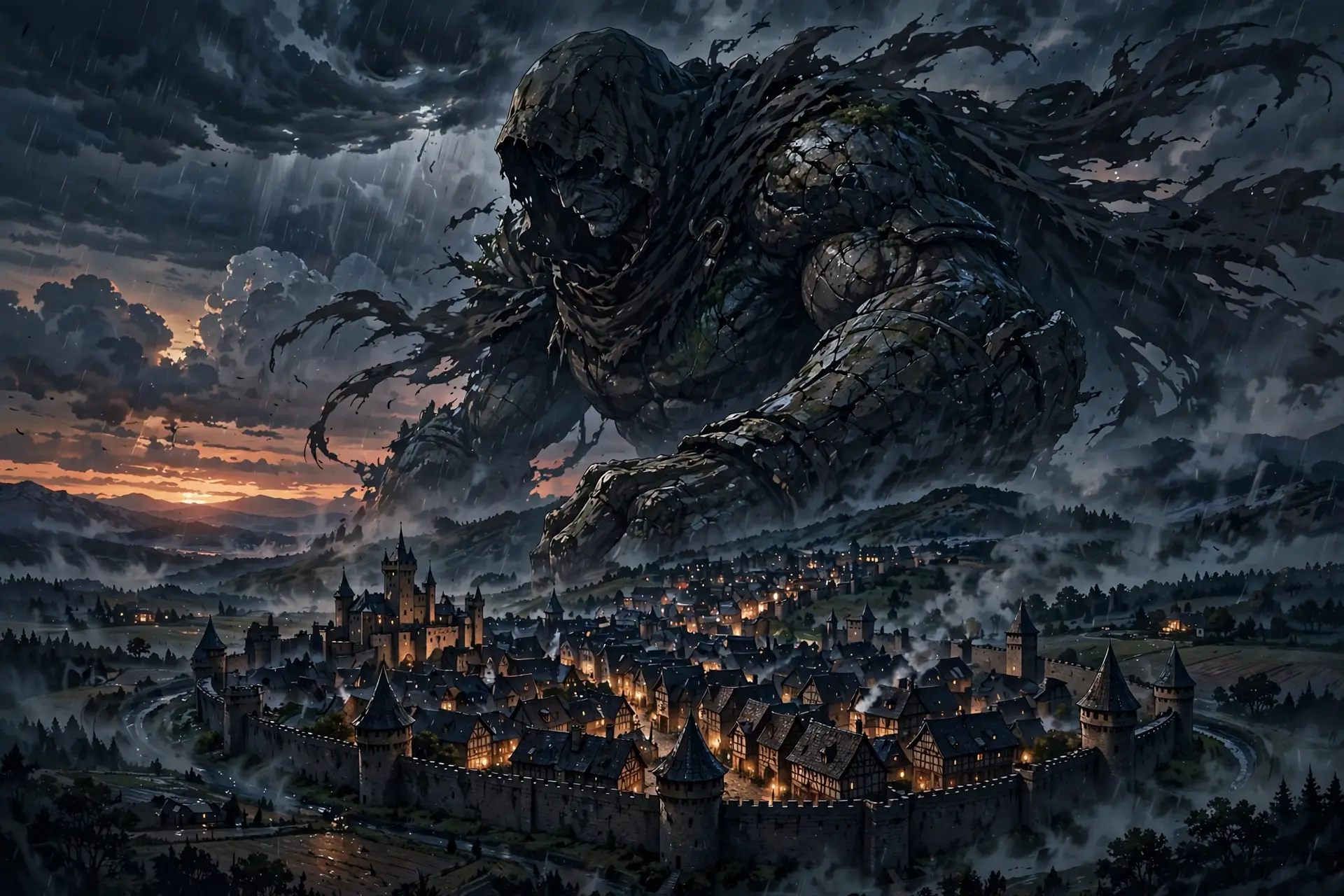

The Premise
A century ago, grotesque giants known as Titans appeared and devoured nearly all of humanity. The survivors retreated behind three enormous concentric walls — Maria, Rose, and Sina — and lived in uneasy peace for a hundred years. Then, one day, a Colossal Titan taller than the wall itself appears and kicks a hole in Wall Maria. The Titans pour in. Among the survivors is a boy named Eren Yeager, who watches his mother die in the attack and swears to exterminate every last Titan.
That’s the setup, and it works beautifully as a hook. But Attack on Titan’s genius is that it never stays the story you think it is. Every few arcs, Isayama pulls back another curtain, and the world gets bigger, stranger, and morally darker. By the end, the question isn’t “how do we kill the Titans” — it’s “what does freedom cost, and who pays for it?”
The Main Characters
Eren Yeager
The protagonist — and one of the most controversial main characters in manga. Eren begins as a hotheaded, idealistic kid driven by rage and a dream of seeing the outside world. Over the course of the series, he transforms into something far more complicated. Without spoiling anything: Eren’s arc is the reason people argue about this manga years after it ended. Love him or hate him, he’s unforgettable.
Mikasa Ackerman
Eren’s adoptive sister and the series’ most skilled soldier. Mikasa is defined by her devotion to Eren, a bond forged when he saved her life as a child. She’s a combat prodigy whose quiet intensity makes her a fan favorite — and her arc asks hard questions about what it means to love someone who keeps slipping away from you.
Armin Arlert
The trio’s strategist. Physically the weakest of the three friends, Armin survives on intelligence, empathy, and an unshakeable belief in a world beyond the walls. His dream of seeing the ocean becomes one of the series’ most powerful symbols. Armin’s growth from timid thinker to decisive leader is one of the manga’s quiet triumphs.
Levi Ackerman
Humanity’s strongest soldier. Levi is a fan-favorite phenomenon — short, blunt, impossibly skilled with the omni-directional mobility gear, and haunted by losses that shaped him. His fights are among the most kinetic sequences in the manga.
Erwin Smith and the Survey Corps
Commander Erwin’s charisma and willingness to sacrifice everything for the truth drive the series’ middle arcs. The Survey Corps — the military branch that ventures beyond the walls — is full of memorable characters: Hange’s manic curiosity, Jean’s reluctant heroism, Sasha’s comic relief and tragedy. The Corps’ motto, “dedicate your hearts,” became iconic for a reason.
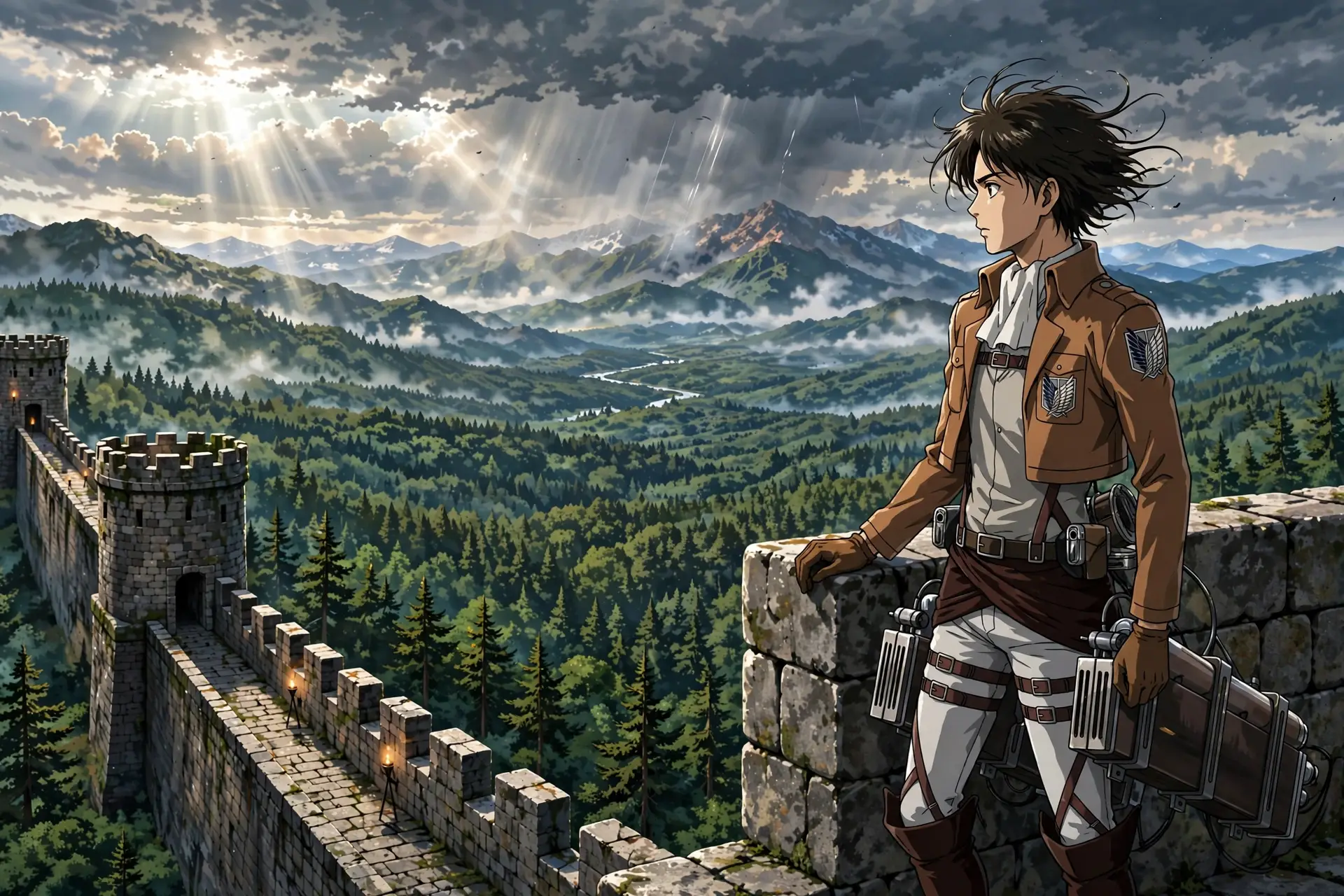
Reading Order and Story Arcs
The manga is complete at 34 volumes and 139 chapters. Here’s the arc structure in reading order:
- Fall of Shiganshina: The breach of Wall Maria and Eren’s vow. The hook that started everything.
- Battle of Trost District: Eren’s mysterious Titan power is revealed during humanity’s desperate counterattack.
- The Female Titan: A mission beyond the walls goes catastrophically wrong, and the enemy is closer than anyone imagined.
- Clash of the Titans: Betrayals, revelations, and the first real answers about what Titans are.
- The Uprising: A political thriller arc — the enemy isn’t just Titans anymore, it’s the government itself.
- Return to Shiganshina: The Survey Corps’ suicide mission to retake Wall Maria. Contains some of the most acclaimed chapters in the series.
- Marley: The perspective flips entirely. This arc recontextualizes everything you thought you knew.
- War for Paradis: The final conflict. Alliances shatter, and the endgame begins.
The Marley arc is where many readers say the series goes from great to legendary. Going in blind is strongly recommended — Attack on Titan is engineered around revelation, and spoilers genuinely diminish the experience.
What Makes the Manga Special
The Mystery Box Done Right
Isayama plants questions from chapter one — what’s in Eren’s father’s basement? Why do Titans look the way they do? — and pays them off over years. Unlike mystery series that stall, Attack on Titan’s answers are bigger than the questions, and they reframe earlier events in ways that reward rereading.
Moral Complexity
The series refuses easy answers. Every faction commits atrocities; every hero makes compromises. The cycle-of-hatred theme isn’t window dressing — it’s the structural core of the final arcs, and it forces readers to sit with uncomfortable questions about revenge, nationalism, and what “the enemy” even means.
Isayama’s Art Evolution
The early chapters are famously rough — Isayama was a young debut artist, and it shows. But his storytelling was always strong, and his art improves dramatically. By the final arcs, the double-page spreads of Titan combat and the expressive character work are genuinely stunning. Stick with it; the payoff is worth the rough start.
Manga vs. Anime
The anime adaptation (by Wit Studio for the first three seasons and MAPPA for the final season) is excellent — superb music, voice acting, and animation that elevates the action. But the manga has its own strengths: Isayama’s paneling, the ability to reread and catch foreshadowing, and a few scenes and details that play differently on the page. Many fans recommend experiencing both: the manga for the complete, unfiltered story, and the anime for the spectacle.
Where to Read Attack on Titan Officially
Kodansha is the official English publisher, with all 34 volumes available in print and digital, plus handsome omnibus and collector’s editions. You can explore the series on Kodansha’s official Attack on Titan page, which lists every volume and format. Buying official volumes supports Isayama and keeps classics like this in print.
Content Warning
An honest note for new readers: Attack on Titan is brutal. It features graphic violence, body horror, war atrocities, and heavy themes of oppression and genocide. It’s rated for older teens and up for good reason. If you’re sensitive to such content, pace yourself — the story earns its darkness, but it’s not a light read.
If you’re in the mood for another long-running shonen epic after this — one with a very different tone — our Naruto manga guide covers Kishimoto’s ninja classic from start to finish.
FAQ
How many volumes and chapters does Attack on Titan have?
The manga is complete at 34 volumes and 139 chapters, serialized from 2009 to 2021. A special final volume with extra pages was also released.
Is the Attack on Titan manga finished?
Yes. The story concluded in 2021, and the anime adaptation has also finished. The ending is complete and widely debated — go in with an open mind.
Should I read the manga or watch the anime first?
Both are excellent. The manga offers Isayama’s original pacing and foreshadowing; the anime adds music and stunning animation. If you hate spoilers, pick one and commit — the story’s twists are its greatest asset.
Is Attack on Titan appropriate for kids?
No. It’s rated 16+ and contains graphic violence, disturbing imagery, and mature themes. It’s aimed at older teens and adults.
What is the reading order?
It’s linear — start at chapter 1 and read through to 139. Optional spin-offs like Before the Fall, No Regrets, and Lost Girls can be read afterward; none are required for the main story.
Where can I read Attack on Titan legally in English?
Kodansha publishes the official English volumes in print and digital, including omnibus editions. Check their official series page for all formats and retailers.
