
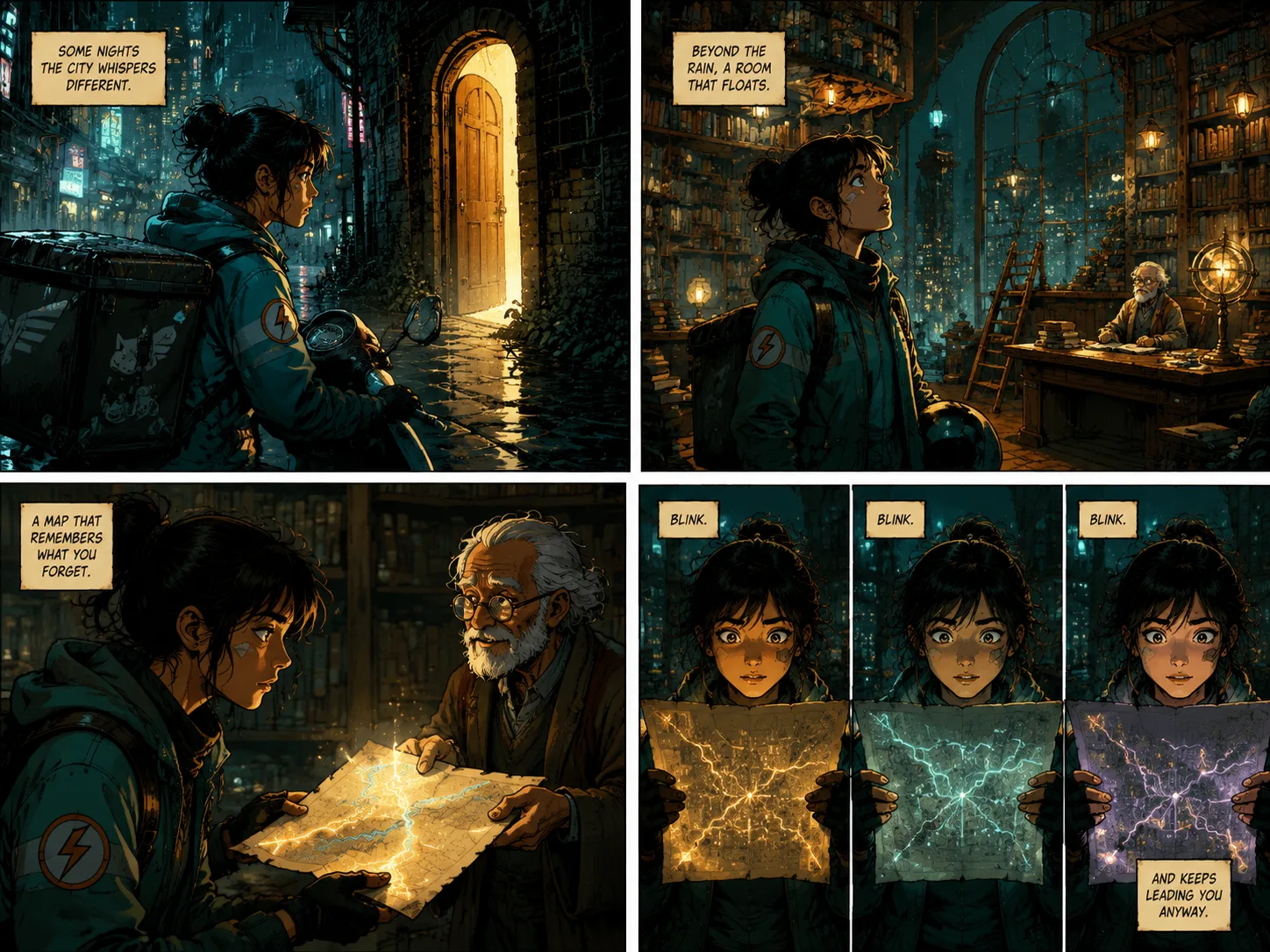

In the first panel, a courier reaches a closed gate with a parcel under one arm. In the next, a light appears in the upstairs window. The space between those panels is where I would begin an original motion-comic experiment. A few drops strike the gate, the courier waits, and the window gradually becomes the brightest point in the picture. Nothing needs to explain the entire story yet.
For this imagined project, I would draw the courier, gate, and house myself or work with an illustrator who has agreed to the adaptation. The scene would belong to an original comic rather than borrow recognizable characters from an existing series. My goal would be to create a short companion clip that preserves the panel’s visual language while adding one carefully chosen change.
The first source panel would show the courier from behind. That choice lets the parcel and posture communicate the waiting without requiring a detailed facial performance. I would make the gate dark, the parcel pale, and the upstairs window a simple rectangle. These shapes need to remain readable when the image is reduced to a small phone screen.
Before adding motion, I would decide what the viewer should notice first. The parcel establishes the courier’s purpose; the closed gate introduces the obstacle; the window offers a possible response. If those three elements compete equally, the scene will feel busy. I would arrange them along a gentle diagonal so the eye travels through the same sequence as the story.
That small interval between panels is a useful place to explore Seedance, an AI video model. I would treat its output as a proposed animated interpretation of the original drawing, then edit it to fit the comic’s rhythm. The model would not decide the plot or replace the finished page. It would help investigate how much movement the pause can hold before it starts telling too much.
Keep the Ink in the Picture
My first concern would be preserving the drawing’s character. If the original uses broad black shapes and a limited color palette, a glossy, fully rendered result would feel like a different adaptation. I would choose a reference that clearly shows the line weight and flat areas of color, then describe that style plainly in the shot brief.
The camera would stay fixed. The scene already has rain, a waiting figure, and a changing window, so a sweeping move would add unnecessary activity. A stable viewpoint also respects the composition of the panel. I would want the clip to feel like the reader has lingered on the page, not like a film crew has suddenly entered the world.
For the first Seedance draft, I would request gentle rainfall in the background, a still courier holding the parcel, and a warm light slowly appearing upstairs. I would avoid asking for dialogue or speech bubbles inside the generated image. Those belong in the edit, where their shape, spelling, and placement can remain consistent with the comic.
Let the Window Answer the Gate
The light should arrive after the waiting has become perceptible. If it is already bright in the opening frame, the scene loses its small change. I would build the starting reference with a dark window and keep the desired final state in mind while writing the brief. The transition should feel gradual enough to notice but short enough that the clip does not stall.
I would not add a silhouette behind the glass in the first version. A visible person could answer questions that the comic deliberately leaves open: who is home, whether they expected the courier, and whether the parcel is welcome. A rectangle of warm light can suggest attention without settling any of those details.
If Seedance makes the entire house brighten, I would narrow the lighting request to the upstairs window and simplify the surrounding reflections. Wet surfaces can spread light convincingly, but too much glow would weaken the focal point. The gate should remain an obstacle in the foreground while the window becomes a possible invitation beyond it.
Protect the Parcel’s Shape
The parcel would be a simple rectangular package with no readable address. Its pale wrapping makes it easy to identify, but it also makes distortion obvious. I would inspect whether its corners remain consistent as the rain moves. A package that expands or melts into the courier’s arm would pull attention away from the intended narrative change.
If that happens, I would revise the original drawing to separate the parcel more clearly from the coat. A small dark outline or a cleaner gap can make the relationship easier to preserve. I would also keep the courier’s arm motionless. There is no need to add a grip adjustment when the scene’s emotional action is waiting.
The same restraint applies to the coat. Wind-blown fabric might look dramatic, but it could make the courier appear impatient or distressed. In a revised Seedance brief, I would keep the coat heavy and largely still, with only subtle environmental movement. The panel should not acquire an exaggerated emotion simply because moving cloth is visually appealing.
Use the Next Panel as the Ending
I would end the clip by cutting to the second original panel rather than forcing the generated scene to resolve everything. That panel could show the same window illuminated while the courier remains below. The reader would recognize the transition from motion back to the page, and the comic would retain control over what happens afterward.
A short caption might connect the two images, but I would write it only after reviewing the visual sequence. If the light change already communicates a response, words may be unnecessary. Adding an explanation such as “someone was home” would flatten the ambiguity. The most useful caption might simply preserve a line that already belongs to the original comic.
The Seedance footage would sit between two authored frames, making it a bridge rather than a replacement for the artwork. I would keep the original aspect ratio if possible and avoid cropping away the gate just to fill a vertical screen. A modest border can be preferable to losing the object that establishes the scene’s tension.
Give Rain a Supporting Role
Sound could make the pause feel richer without adding more visual action. I would use a licensed or original rain recording, keeping it quiet enough that the light’s appearance still feels like the turning point. A sudden thunderclap would suggest danger, which may not belong in this story. The audio should follow the scene’s meaning rather than decorate it automatically.
I would also review the sequence with the sound muted. Rain needs to remain visible through a few clear streaks or small impacts, not a dense curtain that hides the drawing. If the generated weather overwhelms the panel, I would reduce it in the next attempt or select a calmer section of the clip. The courier and parcel must remain the anchors of the composition.
The public caption would identify the animation as an AI-generated adaptation of original artwork. I would not imply that it is official footage from a published series or imitate a recognizable artist’s characters. This keeps the experiment connected to its real source: a small scene created for the purpose of exploring motion.
Leave Something for the Reader
The final clip would not reveal the parcel’s contents or open the gate. Its purpose would be to make the interval between two panels feel alive while preserving the questions that invite another page. The strongest version might contain very little movement beyond the rain and window, and that would suit the project.
For me, the useful role of Seedance in this proposed workflow would be finding that narrow amount of motion. Too little, and the clip adds nothing to the still panel; too much, and it takes over the storytelling. A waiting courier and a newly lit window offer a manageable place to explore the balance, with the original comic always providing the beginning and the next step.
