
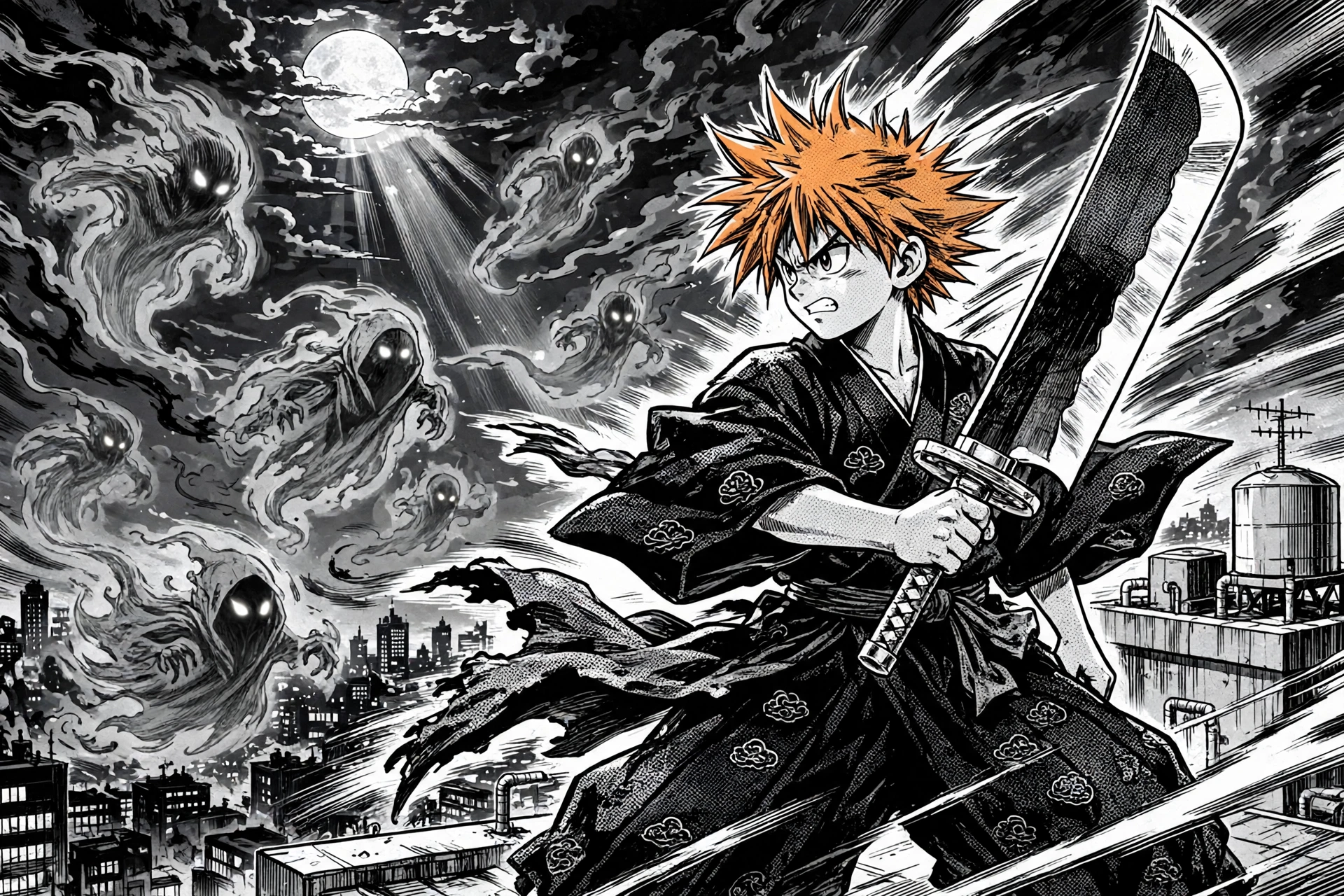

Few manga defined an era the way Bleach did. Tite Kubo’s supernatural action epic turned a teenager who could see ghosts into a Soul Reaper and built one of the most stylish, lore-rich worlds in shonen history. With its bold character designs, fashion-forward aesthetics, and battles that double as philosophical duels, the manga remains essential reading for anyone exploring the medium’s greats. This guide covers the story, the characters, the arcs, and how to read it today.
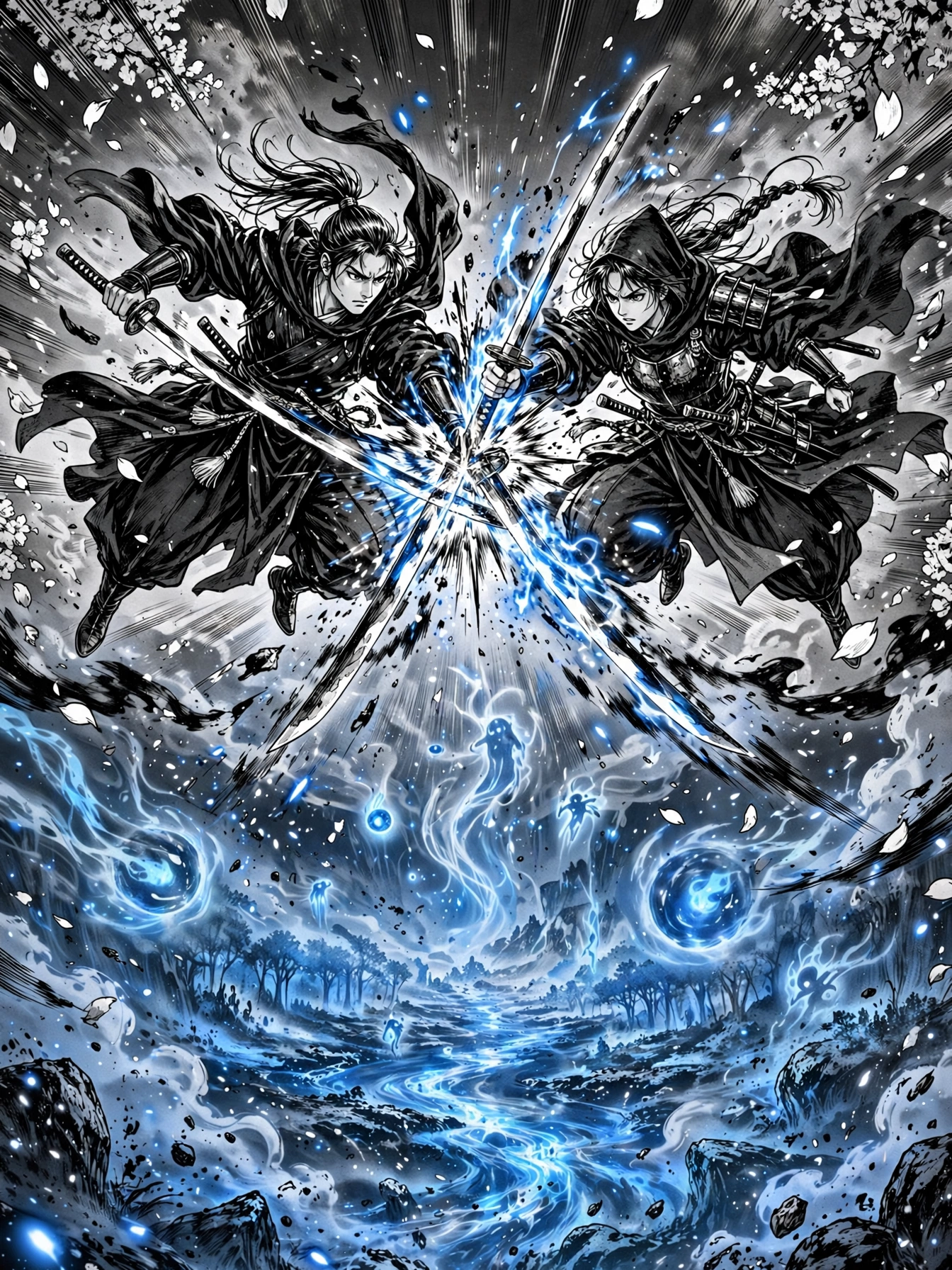
What Is Bleach About?
The story begins with Ichigo Kurosaki, a hot-headed teenager who has been able to see ghosts since childhood. His life changes when he meets Rukia Kuchiki, a Soul Reaper — a guardian of the afterlife who guides souls to rest and battles Hollows, malevolent lost spirits that prey on the living. When a Hollow attacks Ichigo’s family, Rukia is injured in the fight, and Ichigo takes her powers into himself to protect the people he loves.
That single act of defiance sets everything in motion. Ichigo becomes a substitute Soul Reaper, juggling school life with nightly battles against Hollows. But his borrowed power draws the attention of the Soul Society, the vast afterlife bureaucracy that governs Soul Reapers — and Rukia faces punishment for giving a human her powers. What starts as a ghost-hunting story escalates into a rescue mission, then a war, as Ichigo is pulled deeper into a world of rival factions, ancient betrayals, and cosmic stakes.
Kubo builds the series around escalation with purpose. Each arc introduces new layers of the afterlife, new classes of enemies, and new questions about what it means to protect others. The manga’s signature move is the reveal: a casual side character turns out to be a legendary warrior, a quiet ally hides a devastating secret, and battles are won as much by understanding an opponent as by overpowering them.
Main Characters
Ichigo Kurosaki
Ichigo is the orange-haired protagonist whose defining trait is not his power but his protectiveness. Every transformation, every new ability, is driven by the same motivation: he refuses to let anyone he cares about get hurt. Kubo gives him a punkish design and a blunt personality, but underneath is a character who constantly wrestles with the cost of strength and the fear of losing control.
Rukia Kuchiki
Rukia is the Soul Reaper who sets the story in motion. Drawn with elegant simplicity, she is the series’ emotional anchor in its early chapters — the knowledgeable guide who is also running from her own past. Her bond with Ichigo, built on mutual rescue, is the foundation the entire saga stands on.
Uryu Ishida
Uryu is the last of the Quincy, a clan of spiritually aware humans who were historic rivals of the Soul Reapers. Precise, proud, and archery-obsessed, he starts as Ichigo’s rival and grows into one of his most important allies. His arc explores inherited grudges and what it costs to break a cycle of hatred.
Orihime Inoue and Yasutora “Chad” Sado
Ichigo’s human friends gain their own spiritual powers and insist on fighting beside him. Orihime’s healing and reality-rejecting abilities make her one of the most powerful characters in the series, while her kindness keeps the cast grounded. Chad’s quiet strength and loyalty make him a fan favorite — the gentle giant who never backs down.
Sosuke Aizen
One of manga’s most memorable villains, Aizen is the polite, soft-spoken captain whose true nature upends everything the characters believed. His manipulations drive the series’ central conflict, and his calm menace — he rarely needs to raise his voice — makes him a benchmark for shonen antagonists.
Major Story Arcs
- The Substitute Soul Reaper arc: Ichigo’s origin story — meeting Rukia, fighting Hollows, and learning the rules of the afterlife.
- The Soul Society arc: The rescue mission to save Rukia, featuring the invasion of the Soul Society and some of the most celebrated battles in shonen manga.
- The Arrancar arc: Aizen’s army of Arrancars — Hollows with Soul Reaper-like powers — brings the war to the living world and Hueco Mundo.
- The Fake Karakura Town arc: The all-out battle between the Soul Reapers and Aizen’s forces, with reality-bending stakes.
- The Lost Agent arc: A quieter, character-focused stretch about Ichigo losing and regaining his powers.
- The Thousand-Year Blood War arc: The final war against the Quincy empire, resolving centuries of history and delivering the saga’s climax.
Themes That Define the Series
At its heart, Bleach is about the weight of protection. Every major character is defined by who they failed to save or who they refuse to lose. Ichigo’s journey is not really about becoming stronger — it is about accepting what strength costs and choosing to pay it anyway. The series returns to this idea in every arc, reframing it through different characters and conflicts.
Duty versus conscience is the second great theme. The Soul Society is an institution built on order, and much of the conflict comes from characters who realize the institution’s rules conflict with what is right. Rukia’s punishment, the Quincy history, and the final war all ask the same question: when the system is wrong, what does loyalty demand?
Kubo also weaves in a meditation on identity. Ichigo’s heritage turns out to be a braid of every faction in the story — human, Soul Reaper, Quincy, Hollow — making him a living argument that the lines between sides are artificial. His final acceptance of all parts of himself is the series’ thematic payoff.
Why Bleach Still Matters
- Iconic art style: Kubo’s fashion-influenced designs, dramatic panel layouts, and confident use of negative space remain instantly recognizable.
- Unforgettable battles: Fights are structured like character studies — each opponent forces the hero to confront something about themselves.
- Deep bench of characters: The Soul Society’s captains and lieutenants could each headline their own series.
- Cultural impact: As one of the defining series of its era, it shaped the shonen landscape for a generation of readers and creators.
- Complete story: The saga has a definitive ending, so new readers can experience the full journey.
- Continued universe: Kubo has returned to explore more of the world in newer projects, giving longtime fans more to discover.
Where to Find Official Releases
Reading through official channels supports Tite Kubo and the teams that bring the series to English readers. Check out the official VIZ page for Bleach for volumes, special editions, and news about the series. Official digital and print editions are the best way to experience Kubo’s artwork at full quality.
Reading Tips for New Readers
- Read the Soul Society arc without spoilers: It is one of the most acclaimed stretches in manga — go in as fresh as possible.
- Slow down for the art: Kubo’s paneling rewards attention; the quiet spreads hit as hard as the fight scenes.
- Keep track of the captains: The Soul Society has a large cast — a simple list of the squads and their leaders helps early on.
- Don’t rush the quieter arcs: The slower chapters develop the themes that make the big battles meaningful.
- Finish through the final arc: The Thousand-Year Blood War recontextualizes earlier storylines — the ending lands best with the full journey behind you.
If you want a change of pace after the intensity of the Soul Society, try the heartwarming spy comedy of the Spy x Family manga, where the battles are covert and the real mission is family dinner.
Frequently Asked Questions
Who created the Bleach manga?
Bleach was written and illustrated by Tite Kubo. His distinctive art style — sharp character designs, bold fashion influences, and dramatic compositions — became one of the most recognizable looks in shonen manga.
Is the Bleach manga finished?
Yes. The manga’s main serialization concluded, telling Ichigo’s story from his first Hollow fight through the final war. The ending resolves the central conflicts while leaving room for the world to continue in related projects.
How many story arcs are there?
The manga is generally divided into several major arcs, from the Substitute Soul Reaper introduction through the Soul Society rescue, the Arrancar conflict, and the final Thousand-Year Blood War. Each arc raises the stakes and expands the world.
Do I need to read the manga if I watched the anime?
The manga is the original source, and many fans prefer Kubo’s pacing and artwork on the page. The final arc in particular is worth reading in manga form for the full scope of the story as Kubo drew it.
What is a Soul Reaper?
Soul Reapers are guardians of the afterlife in the series’ mythology. They guide departed souls to rest, battle Hollows that threaten the living, and serve the Soul Society — the vast organization that governs the spirit world.
Is Bleach good for new manga readers?
Absolutely. While it is a long series, the early chapters are welcoming — a teenager fighting ghosts with a giant sword is an easy hook — and the world-building unfolds gradually alongside the action.
