
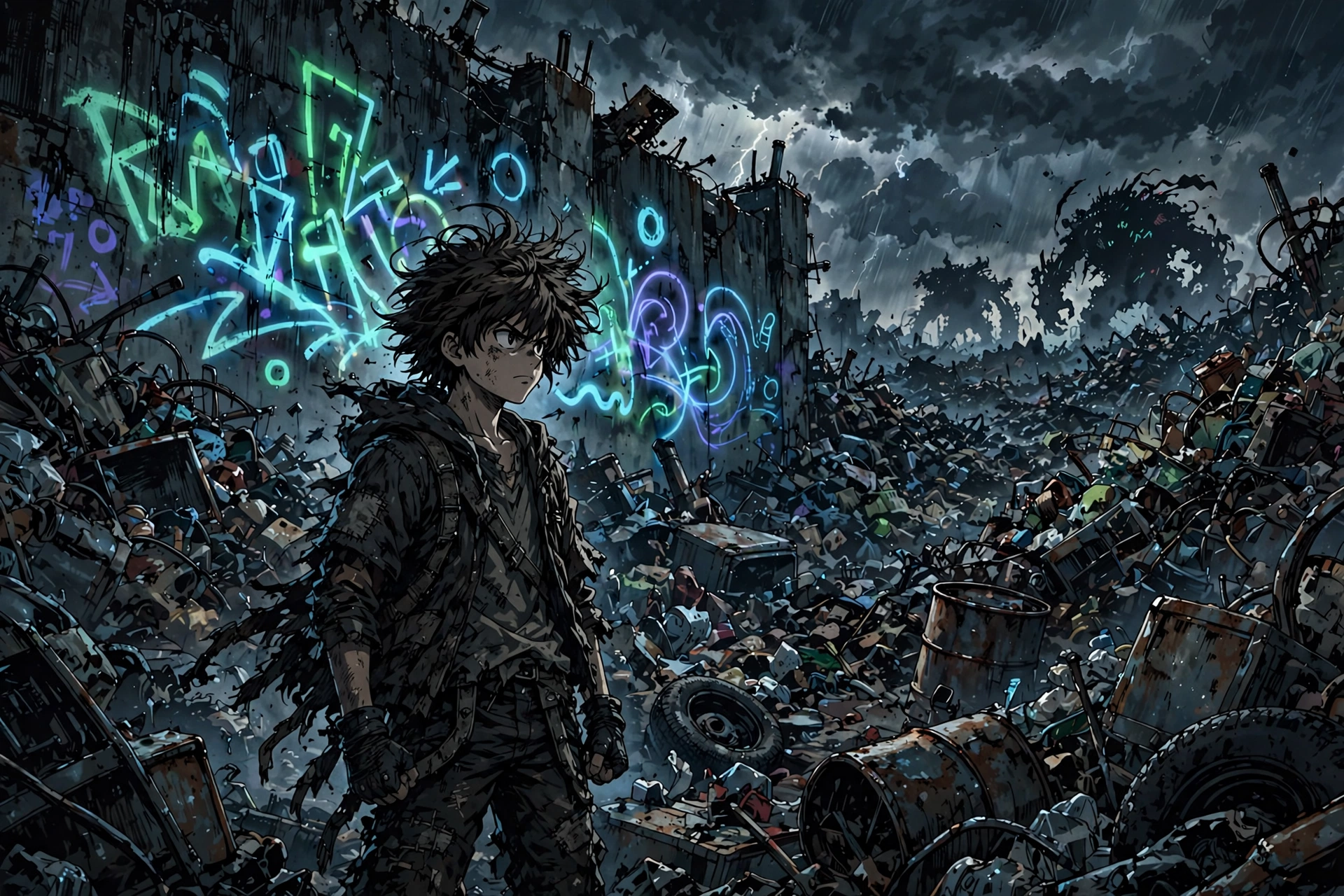

Few recent manga have exploded the way Gachiakuta has. What started in 2022 as a gritty new serial in Weekly Shonen Magazine is now a full-blown franchise: a hit manga with 19 volumes, a 24-episode anime by Studio Bones, a second season on the way, and the 50th Kodansha Manga Award in the shonen category. If you keep hearing the name and want to know what the hype is about — the story, the characters, the world of Vital Instruments, and where to read it officially — this guide has you covered.
What Is Gachiakuta?
Gachiakuta (ガチアクタ) is a dark fantasy action manga written and illustrated by Kei Urana, with graffiti designs by Hideyoshi Ando. It began serialization in Kodansha’s Weekly Shonen Magazine on February 16, 2022, and its chapters have been collected into 19 tankobon volumes as of mid-2026. Kodansha USA licenses the series in English, with digital simulpub chapters available through K MANGA.
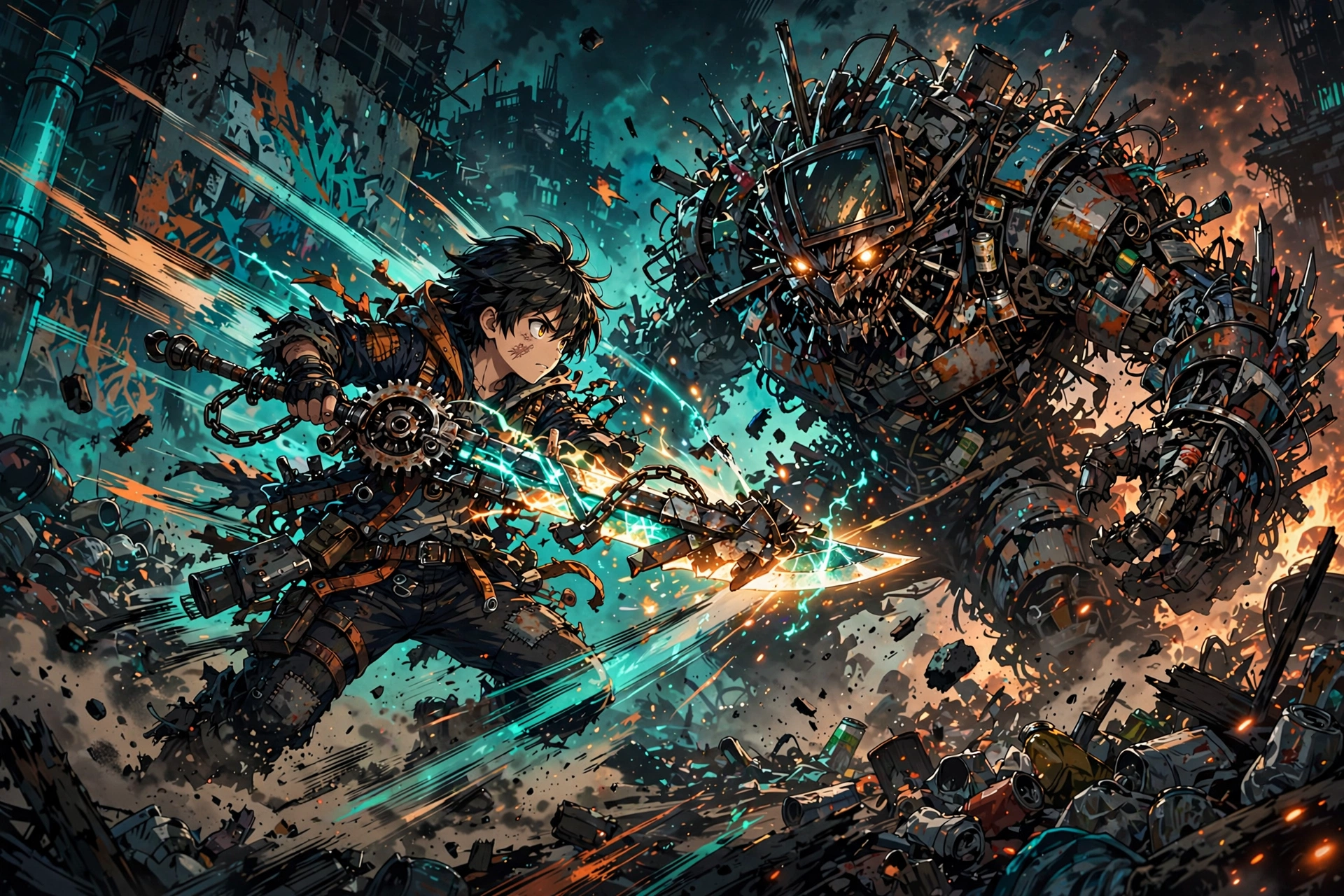
The title roughly translates to “legit trash” — which is fitting, because trash is the foundation of everything in this story: the setting, the monsters, the magic system, and the themes. The manga was nominated for the Kodansha Manga Award in 2023 and 2024 before winning the 50th edition in the shonen category in 2026, cementing its status as one of the defining series of its generation.
The Story So Far
The Sphere and the Pit
Gachiakuta is set in a dystopian world dominated by the Sphere, a floating, country-sized structure where the wealthy upper class lives in luxury. The poor — descendants of criminals known as “tribesfolk” — scrape by in slums around the Sphere’s outer edge, separated from the rich by a heavily guarded wall. Everything the Spherites consider trash is thrown over the edge into the Pit, a vast expanse of garbage below that they believe to be lifeless. Convicted criminals are thrown in too, as a form of execution.
But the Pit is not empty. Unknown to the people above, it is inhabited — a sprawling, toxic civilization built on the ground that its residents call the Ground, infested with monsters born from humanity’s discarded waste.
Rudo’s Fall
The story follows Rudo Surebrec, a teenage boy living in the slums with his foster father Regto. Rudo despises the upper class’s wastefulness and spends his days salvaging discarded items from dump sites — anything worth saving from the Pit. One day he returns home to find Regto murdered. Caught at the scene and disbelieved because of his tribesfolk status, Rudo is convicted of the killing and thrown into the Pit to die.
He doesn’t die. He wakes in an endless landscape of trash, is attacked by creatures made of garbage, and is rescued by a stranger named Enjin — a “Cleaner,” one of the warriors who battle the Pit’s monsters with special weapons called Vital Instruments. Enjin awakens Rudo’s latent power as a Giver, and Rudo reluctantly joins the Cleaners — with one goal burning above all others: revenge against the people who framed him and killed the only family he had.
Main Characters
- Rudo Surebrec — The protagonist. Impulsive, furious, and deeply loyal, Rudo is no polished hero — he’s a hurt kid shaped by loss, and his growth into a Cleaner is the emotional core of the series.
- Enjin — The laid-back but formidable Cleaner who saves Rudo and recruits him. He’s Rudo’s first real mentor figure on the Ground, hiding sharp instincts behind an easygoing grin.
- Zanka Nijiku — A fellow Cleaner whose disciplined fighting style contrasts with Rudo’s raw emotion. His backstory adds real weight to the team’s dynamics.
- Riyo Reaper — Another Cleaner, energetic and unpredictable in battle. She rounds out the core crew that takes Rudo under its wing.
The cast keeps expanding as the story digs into the Ground’s factions, the Raiders who prey on the weak, and the mysterious figures pulling strings on both sides of the Sphere.
The World: Vital Instruments and Trash Beasts
Gachiakuta’s power system is one of its most original features. When an object is deeply loved and cared for, it becomes imbued with Anima — energy born from thoughts and emotion. People who can awaken and wield that energy are called Givers, and the cherished objects they transform into weapons are Vital Instruments. The longer and more deeply a Giver has cared for an object, the stronger it becomes as a weapon — which means every fight is also a statement about what its combatants value.
Opposing them are the Trash Beasts, monsters born from the accumulated Anima of humanity’s discarded garbage. Regular weapons can’t hurt them; only Vital Instruments wielded by Givers can. The Cleaners — organized teams of Givers — are the Ground’s defense against these creatures. It’s a magic system where sentimentality is literally a combat stat, and it gives even the wildest battles genuine emotional stakes.
Why Gachiakuta Stands Out
- The art. Urana’s kinetic, detail-dense artwork fused with Ando’s graffiti designs gives Gachiakuta a visual identity unlike anything else in Weekly Shonen Magazine — street culture spray-painted across dark fantasy.
- The themes. Beneath the action, it’s a story about class, disposability, and who society decides is worthless. The trash motif isn’t set dressing; it’s the thesis.
- The momentum. Award nominations, a bestselling English release, and a hit anime adaptation have made it one of the most talked-about shonen series of the decade — often mentioned alongside Chainsaw Man and Jujutsu Kaisen as the face of a darker, messier new wave.
- The characters. Urana has said her characters tend to come out as “freaky weirdos” no matter how normal she plans them — and the result is a cast that feels unpredictable and alive.
The Anime Adaptation
Studio Bones Film — the studio behind My Hero Academia and Mob Psycho 100 — produces the television anime, which premiered in July 2025 and ran for 24 episodes through December 2025. Crunchyroll streams it worldwide with an English dub. The adaptation was praised for translating Urana’s graffiti-heavy art style into motion, and a second season has already been announced as in production. If you prefer watching to reading, the anime is a faithful, high-energy entry point — though the manga is further ahead in the story.
Where to Read Gachiakuta Officially
The best way to read Gachiakuta in English is through official Kodansha channels. Start at Kodansha’s official Gachiakuta series page, which offers the series synopsis, a free chapter preview, and every English volume in print and digital. New chapters are also simulpubbed in English through the K MANGA app, so you can stay current with Japan. Digital volumes are additionally available on major ebook stores. Stick to these official sources — they offer the best translation quality, and your support goes directly to Kei Urana and the team.
Frequently Asked Questions
Is the Gachiakuta manga finished?
No. The manga is ongoing, though it entered a short hiatus in September 2026 so Urana could conduct research for upcoming story material. New chapters will resume once the break ends.
Where can I read Gachiakuta officially in English?
Kodansha USA publishes the English volumes in print and digital, new chapters simulpub through the K MANGA app, and digital volumes are sold on major ebook retailers.
Is Gachiakuta appropriate for younger teens?
Kodansha rates the series 16+. It features intense violence, dark themes, and some strong language — it’s aimed at older teens and adults rather than young kids.
Where can I watch the Gachiakuta anime?
The 24-episode first season, produced by Bones Film, streams on Crunchyroll worldwide with subtitles and an English dub. A second season is in production.
Should I read the manga before watching the anime?
Either order works. The anime adapts the early manga faithfully, so watching first won’t spoil anything the manga doesn’t cover — but the manga is further along, so readers get more of the story right now.
Conclusion
Gachiakuta earns its hype: a one-of-a-kind art style, a magic system built on the things we love and throw away, and a revenge story with real thematic teeth. Start with the free chapter preview on Kodansha’s official page, and you’ll know within twenty pages whether Rudo’s journey is for you.
New to manga reading in general? Check out our my reading manga guide for the best official apps, free simulpub services, and beginner tips to start reading the right way.
