

If you have ever wanted to try Japanese comics but felt lost about where to begin, this how to start reading manga beginners guide is for you. Manga — Japanese comics and graphic novels — is one of the most popular storytelling mediums in the world, with a global market that, according to Wikipedia’s manga overview, hit a record ¥704.3 billion in Japan in 2024. Yet many newcomers put off their first volume because the right-to-left reading direction, the huge number of genres, and the unfamiliar terms can feel intimidating.
The good news is that manga is easier to pick up than it looks. This guide walks you through everything a new reader needs: what manga actually is, how to read it correctly, which genres and demographics match your taste, what formats exist, how to pick your first series, and where to find beginner-friendly titles legally.
What Is Manga?
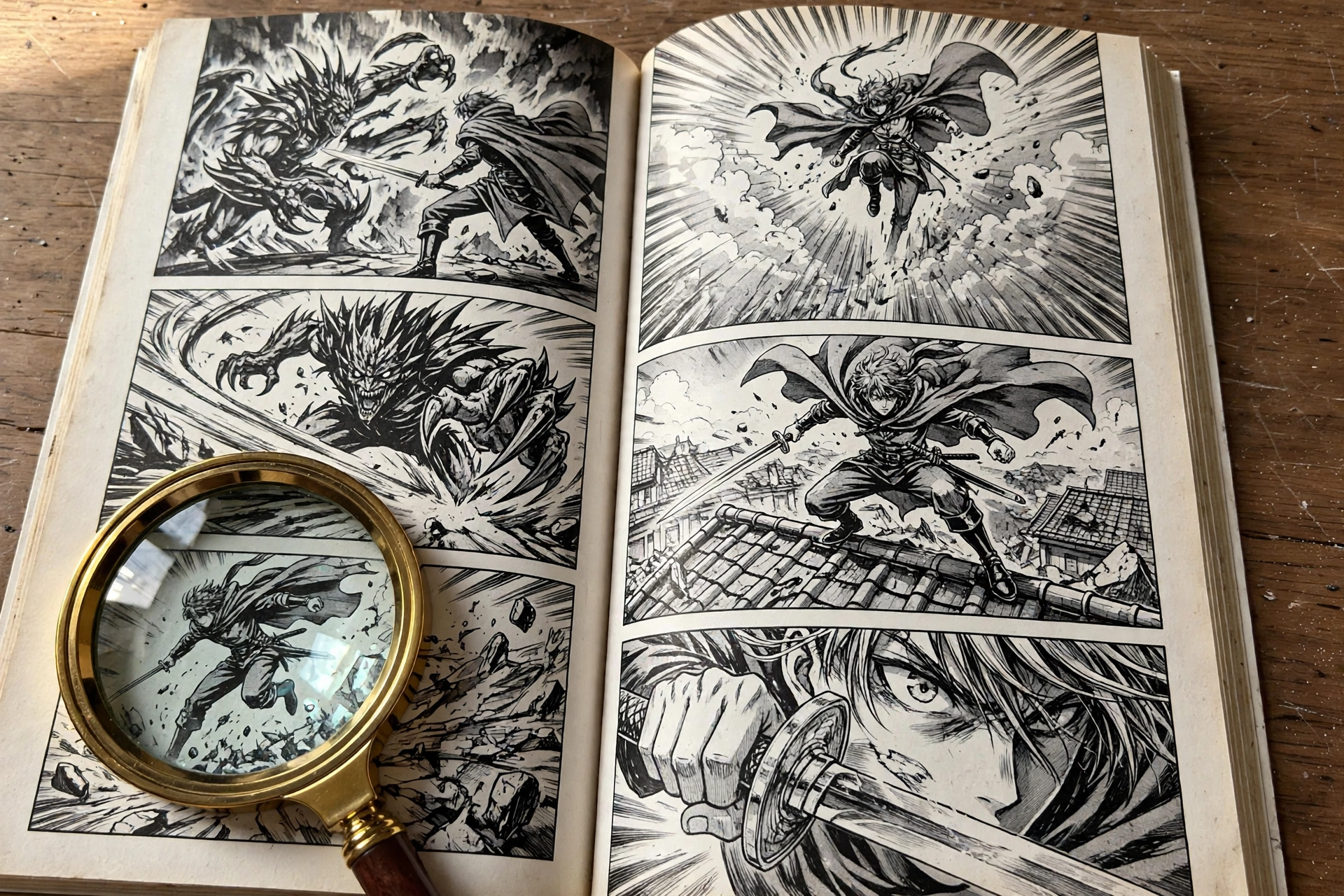
The word “manga” is Japanese for comics or “whimsical pictures,” and in Japan it refers to all cartooning and comics. Outside Japan, the term is used specifically for comics originally published in Japan. Unlike most Western comics, manga is typically printed in black and white, with only covers and occasional chapter openers in color. Stories are usually serialized chapter by chapter in large weekly or monthly anthology magazines before being collected into standalone paperback volumes called tankōbon.
According to Wikipedia’s overview of manga, the medium features a broad range of genres — action, romance, comedy, horror, sports, mystery, fantasy, and many more — and is read by people of all ages in Japan, from children to retirees. Manga artists, called mangaka in Japanese, typically work with a small team of assistants in a studio and are guided by an editor at a publishing company. If a series becomes popular, it may also be adapted into an anime (Japanese animation), which is how many Western fans first discover manga.
How to Read Manga: The Right-to-Left Rule
The single biggest hurdle for beginners is reading direction. Western comics are read left to right, but manga follows Japanese text layout: it is read from right to left, and top to bottom. Here is how to apply that on the page:
- Start at the “back” of the book. The cover of a manga sits at what a Western reader would consider the back of the book. Flip the volume over and open it “backwards” to reach page one.
- Begin each page at the top-right panel. Find the panel in the upper-right corner of the page and start there.
- Read panels right to left across each row. When you reach the far left of a row, return your eyes to the far right and continue with the next row down.
- Read vertically stacked panels top to bottom. If panels are arranged in a vertical column, simply read downward.
- Follow speech bubbles the same way. Dialogue bubbles within a panel also follow right-to-left, top-to-bottom order, so read the rightmost bubble first.
It feels strange for the first few pages, but most readers report that it becomes intuitive after one volume. If you ever feel lost about panel order, look for the largest gap between rows or columns — the reading path flows across the larger gaps, which is a handy rule of thumb used by experienced readers.
Manga Genres and Demographics: Find Your Fit
Japanese publishers primarily classify manga by the age and gender of the intended audience, a system called demographics. Knowing these helps you find stories written for readers like you:
- Shonen (boys up to 18): Action and adventure with young male heroes. Themes include friendship, rivalry, sports, robots, and supernatural battles. Think of the big hits like Naruto, One Piece, and My Hero Academia.
- Shojo (girls up to 18): Romance, drama, and emotional storytelling, often with female protagonists. Classic examples include Sailor Moon and Fruits Basket.
- Seinen (adult men, roughly 18–30): More complex, mature, and sometimes darker themes — psychological drama, gritty action, historical epics. Berserk and Vagabond are famous seinen works.
- Josei (adult women): Realistic romance and slice-of-life stories aimed at adult women, with nuanced relationships and everyday settings.
- Kodomo (children): Light, fun, and simple stories for young kids, such as Doraemon.
On top of demographics, manga spans every subject genre imaginable: sports (Haikyuu!!), cooking (Food Wars!), horror (Uzumaki), mystery (Death Note), comedy, sci-fi, fantasy, and iyashikei (healing, relaxing slice-of-life) titles like Yotsuba&! — widely recommended as one of the gentlest manga to start with.
Beginner tip: Start with the demographic and subject genre that match your favorite movies, TV shows, or books. If you love fantasy adventures, a fantasy shonen is a natural entry point. If you love romance dramas, try a shojo or josei romance.
A Small Note on Reading Legally
Pirated scan sites are everywhere, but they hurt the mangaka whose work you enjoy, and they often come with malware and aggressive ads. Once you know where to read manga legally online, you will find plenty of free and affordable official options, including free chapters from publishers, library apps, and low-cost subscriptions.
Frequently Asked Questions
1. Is manga read right to left?
Yes. Manga follows Japanese text direction: pages, panels, and speech bubbles are read from right to left and top to bottom. Start at the top-right panel of each page and work leftward, then move down to the next row.
2. Do I need to learn Japanese to read manga?
No. The vast majority of popular manga is professionally translated into English (and many other languages) and officially released in print and digital formats outside Japan.
3. What is the best manga genre for beginners?
Shonen (action/adventure) and slice-of-life are the most common beginner picks because their stories are straightforward and engaging. Shojo romance is a great choice if you prefer character-driven drama. Start with the genre that matches your existing taste in movies or novels.
4. Should I read manga digitally or in print?
Either works. Digital is cheaper, portable, and lets you sample free chapters instantly. Print gives you collectible volumes and is easier on the eyes for long sessions. Many readers mix both.
5. How long does one manga volume take to read?
Most beginners finish a standard 180–200 page tankobon in 45–90 minutes. Manga reads faster than a novel because the art carries much of the storytelling.
6. Is manga only for kids?
Not at all. Manga is written for every age group — children (kodomo), teens (shonen/shojo), and adults (seinen/josei) — and covers mature, complex themes. There is as much manga for adults as for young readers.
Conclusion
Learning how to start reading manga as a beginner comes down to four steps: learn the right-to-left reading order, pick the demographic and genre that match your taste, choose a short or familiar first series, and read through official sources. Once the page direction clicks — usually within your first volume — the vast world of manga opens up, from weekly serialized adventures to quiet, moving one-shots. Grab a free first chapter today and see where the story takes you.
