
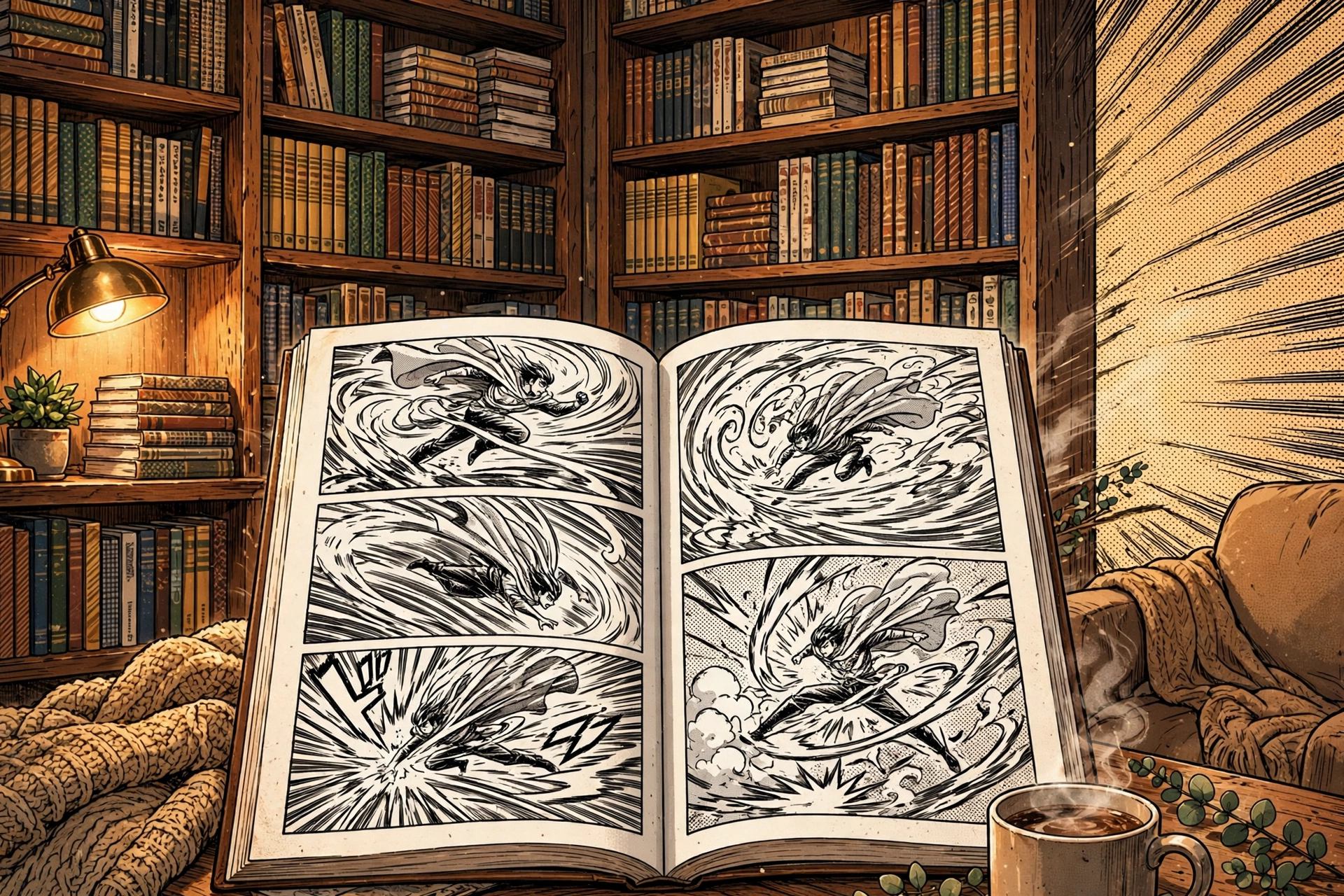

Manga is one of the most influential art forms on the planet. These Japanese comics have inspired blockbuster anime, Hollywood films, fashion trends, and a global fanbase in the hundreds of millions. Yet for newcomers, the world of manga can feel intimidating: thousands of series, unfamiliar genres, and the famous right-to-left reading direction.
This beginner’s guide explains everything you need to know — what manga is, how it works, the major genres, and exactly where to start.
What Is Manga?
Manga (漫画) is the Japanese word for comics and cartooning. In English, it refers specifically to comics created in Japan (or in the Japanese style). Manga covers every genre imaginable — action, romance, horror, sports, cooking, history — and is read by all ages, from children to retirees.
A few things make manga unique:
- Black-and-white art: The vast majority of manga is drawn in black and white, with masterful ink work and screentone shading. Color pages are reserved for special chapters.
- Right-to-left reading: Traditional manga reads right to left, top to bottom — panels, speech bubbles, and pages all follow this flow.
- Serialization: Most manga debuts in weekly or monthly anthology magazines (like Weekly Shonen Jump), then gets collected into book volumes called tankobon.
- Enormous variety: There is genuinely a manga for everyone, including genres that barely exist in Western comics.
A Brief History of Manga
- 12th century roots: Picture scrolls like the Choju-jinbutsu-giga are often cited as manga’s earliest ancestors.
- Post-war birth: Osamu Tezuka — the “God of Manga” — revolutionized the form in the 1940s–50s with cinematic paneling in Astro Boy.
- Magazine boom: Weekly Shonen Jump launched in 1968 and became the most successful comics magazine in history, serializing Dragon Ball, One Piece, Naruto, and Demon Slayer.
- Global expansion: From the 1990s onward, translated manga conquered bookstores worldwide, and today manga outsells American superhero comics in many markets.
Understanding Manga Demographics
Japanese manga is traditionally categorized by its target audience. These are marketing labels, not strict rules — plenty of adults read shonen, and plenty of men read shojo.
- Shonen (boys 12–18): Action, adventure, friendship, and rivalry. One Piece, Naruto, Demon Slayer, My Hero Academia, and Jujutsu Kaisen. The biggest and most exported category.
- Shojo (girls 12–18): Romance and relationships with expressive, emotional art. Fruits Basket, Sailor Moon, Ouran High School Host Club.
- Seinen (adult men): Mature themes, complex plots, psychological depth. Berserk, Vagabond, Monster, Tokyo Ghoul.
- Josei (adult women): Realistic romance and drama for grown-up readers. Nana, Paradise Kiss, Princess Jellyfish.
- Kodomo (children): Simple, fun stories for young kids. Doraemon, Pokemon Adventures.
Beyond demographics, genres like isekai (other-world fantasy), sports, horror, and slice-of-life cut across all categories.
How to Read Manga Right-to-Left
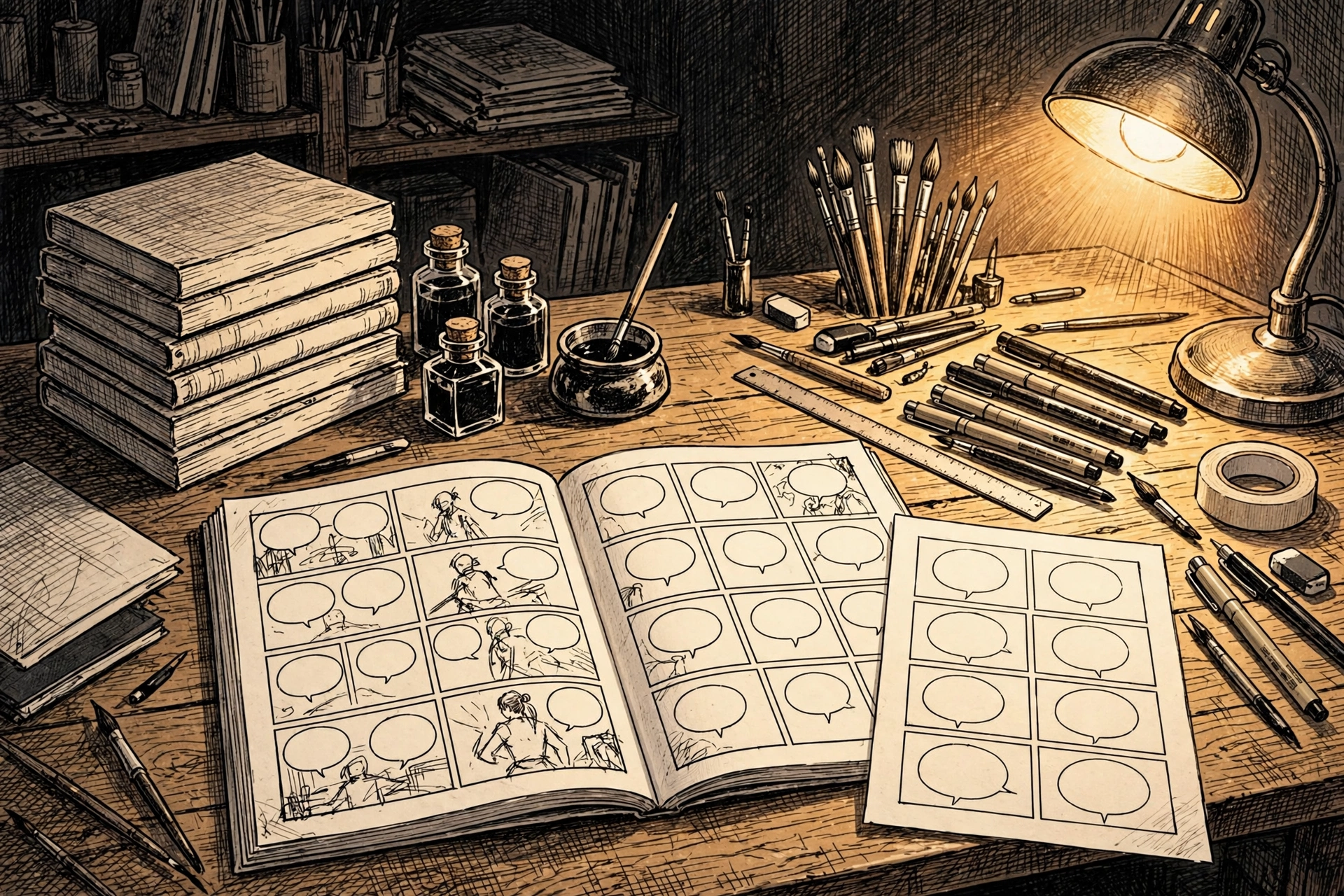
The right-to-left format trips up every beginner exactly once. Here is how it works:
- Start at the “back.” Open the book from what feels like the back cover — that is the front in Japanese format.
- Read panels right to left. On each page, start with the top-right panel and move left, then down to the next row.
- Speech bubbles follow the same flow. Within a panel, read bubbles from right to left too.
- It becomes automatic fast. Most readers stop noticing after one volume. Your brain adapts surprisingly quickly.
Digital manga apps handle this automatically — just keep swiping and the order takes care of itself.
Where to Read Manga Legally
Support the industry by reading on official platforms:
- VIZ / Shonen Jump app — The official English home of Shonen Jump series. A massive library for a few dollars a month.
- MANGA Plus — Shueisha’s free official app with simultaneous English releases of the biggest series.
- Crunchyroll Manga — Included with a Crunchyroll subscription.
- BookWalker — A huge digital bookstore for buying individual volumes.
- Your local library — Many libraries stock extensive manga collections, physical and digital.
Pirate aggregator sites hurt the creators and often serve malware. The legal options are affordable and excellent.
For the official source of the biggest shonen hits, visit VIZ Media — the English-language publisher behind Naruto, One Piece, and Demon Slayer.
How to Start Reading Manga: A Starter Plan
- Pick your genre. Love action? Start with shonen. Prefer romance? Try shojo or josei.
- Start with a complete series. Finished stories (Fullmetal Alchemist, Death Note) give you a complete experience without waiting years.
- Or join a phenomenon. Reading an ongoing giant like One Piece or Jujutsu Kaisen lets you join the global conversation.
- Try before you buy. Official apps offer free chapters — sample widely before committing.
- Watch the anime after. Anime adaptations are great companions, but the manga almost always has more story.
If you want a perfect first modern series, check out our guide to the Jujutsu Kaisen manga — one of the defining shonen hits of this generation.
Manga vs. Anime: What’s the Difference?
Newcomers often ask. Simply put: manga is the comic, anime is the animation. Most anime series are adaptations of manga (or light novels). The manga usually:
- Comes first and contains the original story.
- Continues past where the anime ends.
- Includes details and chapters the anime skips.
- Lets you experience the story at your own pace.
Many fans do both — watch the anime for the spectacle, read the manga for the complete story.
Essential Manga Every Beginner Should Know
- One Piece — The best-selling comic in history. An epic pirate adventure about freedom and friendship.
- Naruto — The ninja saga that defined a generation of fans worldwide.
- Dragon Ball — The grandfather of modern battle shonen.
- Death Note — A psychological thriller about a notebook that kills. Perfect for non-action fans.
- Fullmetal Alchemist — Often called the perfect manga: complete, tightly plotted, emotionally devastating.
- Demon Slayer — Breathtaking art and a heartfelt story that broke every sales record.
- Berserk — The dark fantasy masterpiece (mature readers only).
- Sailor Moon — The shojo classic that launched a thousand magical-girl stories.
Frequently Asked Questions
Why is manga black and white?
Weekly serialization schedules make full color impractical — a mangaka and their assistants must produce 15–20 pages every single week. Black-and-white ink art is faster to produce and has become an aesthetic tradition in its own right.
Why does manga read right-to-left?
Because Japanese is traditionally written and read right-to-left, top-to-bottom. English translations preserve the original panel order to keep the art intact — flipping the art would reverse every image and ruin the composition.
Is manga only for kids?
Not at all. While shonen and shojo target teens, seinen and josei manga tackle adult themes with serious literary ambition. Series like Monster, Vagabond, and 20th Century Boys are aimed squarely at adults.
How much does it cost to read manga legally?
Very little. The Shonen Jump app costs about the price of one coffee per month for access to thousands of chapters. MANGA Plus is free. Individual digital volumes typically cost $5–$10.
What’s the difference between manga and manhwa?
Manga is Japanese, usually black-and-white, and reads right-to-left in page format. Manhwa is Korean, usually full-color, reads left-to-right, and uses a vertical-scroll webtoon format. Both are wonderful.
Final Thoughts
Manga is a universe disguised as a medium — once you step in, you will find stories for every mood and every stage of life. Start with one series that matches your taste, learn the right-to-left rhythm, and give it a volume or two.
A decade from now, you will wonder how you ever lived without it.
