
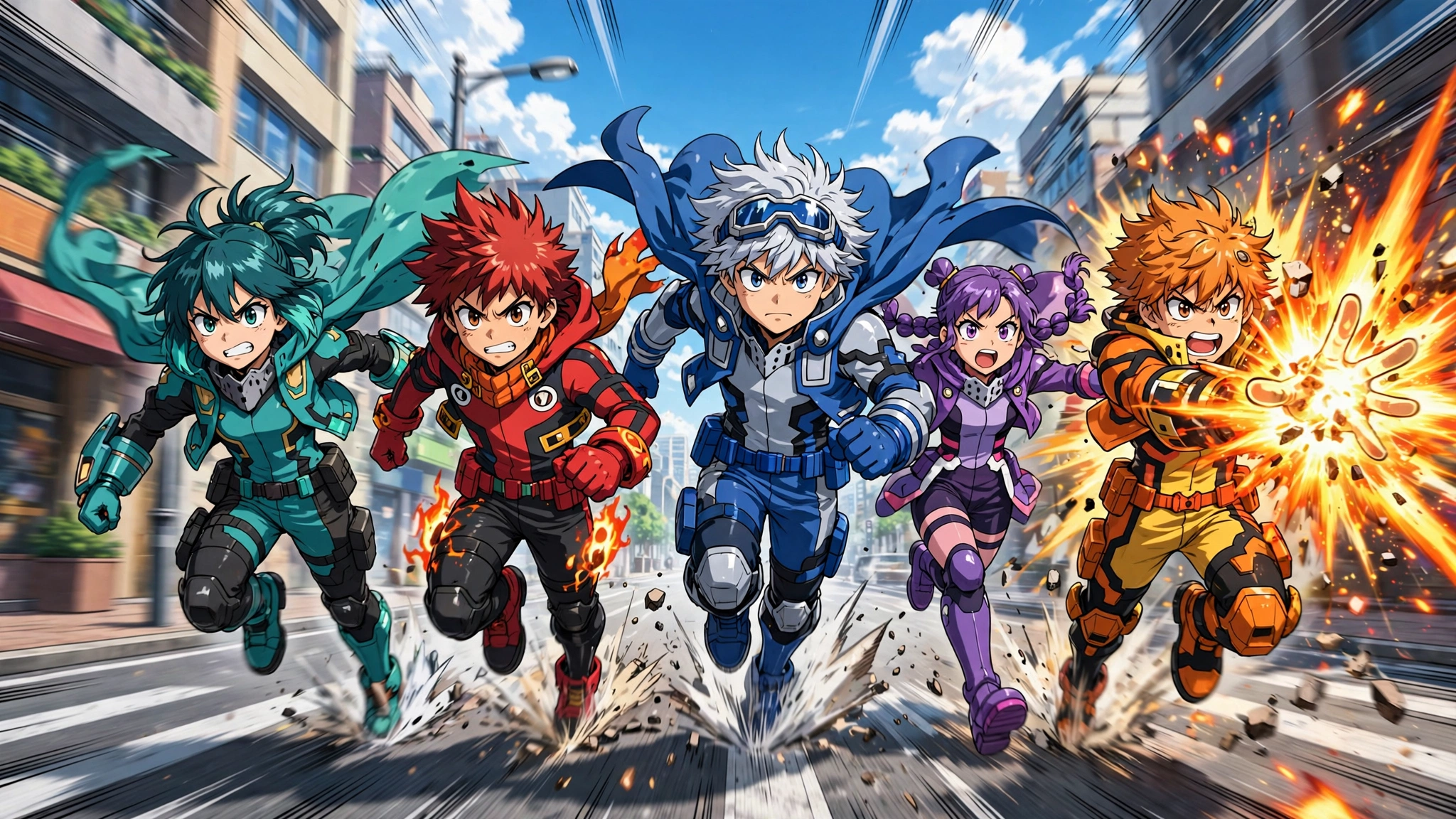

Few manga series of the last decade have matched the reach and staying power of this one. The my hero academia manga, written and illustrated by Kohei Horikoshi, ran for ten years in Weekly Shonen Jump, sold over 100 million copies worldwide, and became a defining shonen series for a generation. Whether you are discovering it for the first time or revisiting it now that the story is complete, this guide covers the plot, the characters, the Quirk system, and how the manga compares to the anime.
What Is My Hero Academia?
My Hero Academia (Japanese: Boku no Hero Academia) is a Japanese manga series serialized in Shueisha’s Weekly Shonen Jump from July 2014 to August 2024, with its chapters collected into 42 tankobon volumes. It is licensed in English by Viz Media. The story is set in a world where roughly 80% of the population has developed superpowers known as Quirks — abilities that range from mundane to godlike. Professional superheroes, licensed and ranked by a national commission, protect society from villains who abuse their Quirks.
The My Hero Academia manga on Wikipedia is a good quick reference, but the full experience is the manga itself: Horikoshi’s art blends classic Western superhero comic energy with shonen manga storytelling, and the series is praised for its dynamic action scenes and large, memorable cast.
The Story: A Quirkless Boy’s Dream
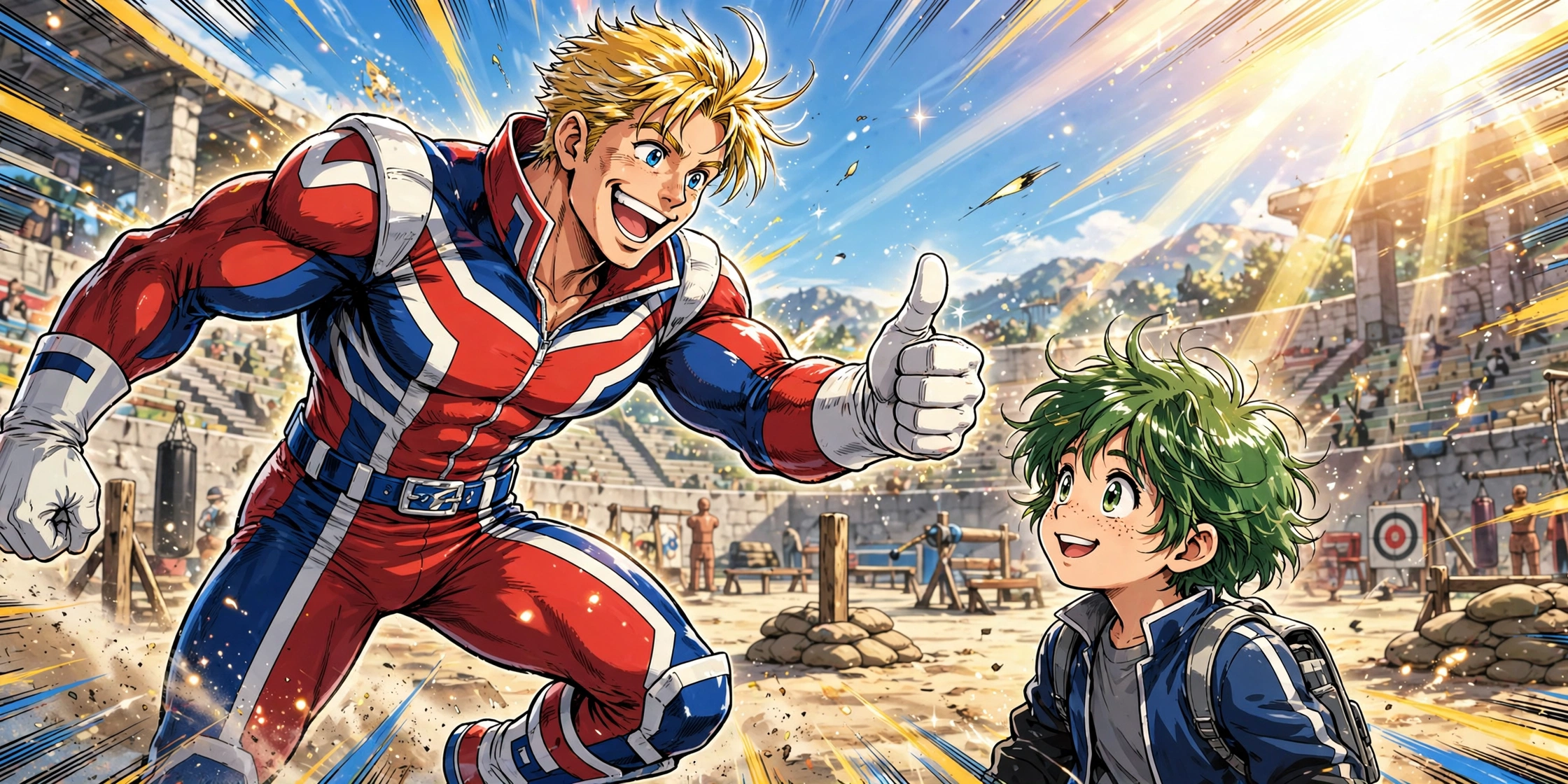
The protagonist is Izuku Midoriya, nicknamed Deku — a boy born without a Quirk in a world where almost everyone has one. Despite his powerlessness, he dreams of becoming a hero like his idol, the world’s greatest hero All Might. One day, while trying to save his childhood friend Katsuki Bakugo from a villain, Deku catches All Might’s attention. Recognizing Deku’s heroic spirit, All Might reveals that his own power — One For All, a Quirk that stockpiles strength and can be passed from person to person — was itself inherited. He chooses Deku as the ninth holder and helps him enroll in U.A. High School, Japan’s most prestigious academy for heroes-in-training.
From there, the story follows Deku and his Class 1-A classmates through training, internships, villain attacks, and an escalating war between heroes and the villains led by Tomura Shigaraki and the evil mastermind All For One. The final war arc delivers one of the most ambitious conclusions in modern shonen, resolving the fates of dozens of characters across 42 volumes.
Main Characters
- Izuku Midoriya (Deku) — The Quirkless protagonist who inherits One For All. Defined by his analytical mind, compassion, and refusal to give up on saving everyone — including villains.
- All Might — The Symbol of Peace and former No. 1 Hero. Wounded in battle, he passes his power to Deku and becomes his mentor.
- Katsuki Bakugo — Deku’s explosive childhood friend and rival. Arrogant at first, his arc toward atonement and self-understanding is one of the series’ strongest.
- Ochaco Uraraka — Deku’s warm-hearted classmate whose zero-gravity Quirk and emotional intelligence make her central to the story’s heart.
- Shoto Todoroki — A prodigy with half-fire, half-ice powers and a traumatic family history. His journey toward forgiving — but not forgetting — his father Endeavor anchors the series’ family drama.
- Tomura Shigaraki — The main villain: a broken young man shaped into a weapon by All For One, whose tragic backstory challenges Deku’s belief that everyone can be saved.
- All For One — The series’ ultimate evil, a centuries-old villain who can steal and transfer Quirks.
Understanding Quirks
Quirks are the foundation of the series’ worldbuilding. Key things to know:
- Quirks are genetic. They usually manifest in early childhood and are often inherited in some form from parents.
- Every Quirk has limits. Most come with drawbacks — usage limits, self-injury, or physical mutations — which forces characters to be creative.
- Types include Emitter, Transformation, and Mutant. Emitter Quirks (like Bakugo’s explosions) project effects; Transformation Quirks temporarily alter the body; Mutant Quirks permanently change it.
- Quirk marriages exist. Some families arrange marriages to produce powerful Quirk combinations — a practice the series critiques through the Todoroki family.
- Quirk Singularity theory. A recurring idea: Quirks grow stronger each generation, eventually becoming too powerful for society to handle — a key motivation behind the final war.
The power system is one of the best-balanced in shonen: creative matchups and teamwork matter more than raw power, which keeps battles unpredictable across all 42 volumes.
Key Story Arcs
- U.A. Entrance Exam — Deku earns his place at U.A. by saving a fellow examinee, proving heroism isn’t about power alone.
- U.S.J. Attack — The League of Villains’ first assault introduces the real stakes of the hero world.
- Sports Festival — Deku vs. Todoroki remains one of the most celebrated fights in modern manga.
- Forest Training Camp — A villain raid kidnaps Bakugo and sets the war in motion.
- Shie Hassaikai / Overhaul arc — A dark yakuza storyline with the fan-favorite Mirio Togata.
- Paranormal Liberation War — The first full-scale war arc, with devastating consequences for heroes.
- Final Act Saga — The concluding war between heroes and villains, ending the ten-year story.
Manga vs Anime: Which Should You Choose?
The anime by studio Bones is excellent, but the manga has its own advantages:
- The manga is complete. The anime’s final season was still airing through 2025; the manga ended in August 2024, so readers can experience the full ending now.
- Horikoshi’s art is exceptional. His detailed linework and expressive character acting lose some nuance in animation.
- Pacing. The manga moves faster through the final war — no filler, no recaps, just the story.
- The anime adds color and music. For the biggest battles, many fans enjoy watching after reading.
Most longtime fans recommend reading the manga first for the complete, unfiltered story, then watching the anime for the spectacle.
Spin-offs and Extended Media
The franchise extends far beyond the main 42 volumes:
- My Hero Academia: Vigilantes — A completed prequel spin-off about illegal heroes, with its own anime adaptation.
- My Hero Academia: Smash!! — A gag-manga parody of the main series.
- My Hero Academia: Team-Up Missions — Side stories pairing heroes in team missions.
- Four anime films — Two Heroes, Heroes Rising, World Heroes’ Mission, and You’re Next.
- Light novels, stage plays, and video games — including the battle royale game Ultra Rumble.
The series also won the Sugoi Japan Award and the Harvey Award for Best Manga, and its volumes regularly appeared on the New York Times bestseller list.
Why You Should Read It
- The complete shonen package. Training arcs, tournaments, rivalries, war sagas, and a satisfying ending — all in one 42-volume epic.
- A hero who earns his power. Deku’s journey from Quirkless to hero is built on discipline, analysis, and compassion, not just luck.
- Villains with depth. Shigaraki, Twice, and Toga have some of the most empathetic villain writing in the genre.
- Themes that grow up with you. What starts as a kids’ superhero story matures into a complex examination of hero society, prejudice, and redemption.
- It’s finished. No waiting for chapters — the entire story is available to binge.
If you prefer dark, solo power-fantasy instead, our Solo Leveling manga guide covers the other end of the spectrum.
Frequently Asked Questions
Is the My Hero Academia manga finished?
Yes. The manga ended in August 2024 after ten years of serialization, with 42 collected volumes. Spin-offs like Team-Up Missions continued slightly beyond that.
How many volumes does My Hero Academia have?
The main series has 42 tankobon volumes, making it one of the longer modern shonen series in Weekly Shonen Jump.
What is a Quirk in My Hero Academia?
A Quirk is a superpower possessed by roughly 80% of the population. They vary enormously — from Deku’s inherited One For All to Ochaco’s zero gravity — and most come with limitations or physical costs.
Who is the main villain?
Tomura Shigaraki is the central villain for most of the series, mentored by the ultimate evil All For One — a centuries-old villain who can steal and transfer Quirks. Their relationship drives the final conflict.
Is the manga better than the anime?
Both are excellent. The manga is complete and showcases Horikoshi’s detailed artwork at full pace; the anime adds color, voice acting, and music. Reading the manga first, then watching key anime arcs, is the most popular approach.
Where can I read the My Hero Academia manga legally?
Official English releases are published by Viz Media — available digitally through the Shonen Jump app and in print from major retailers. The first chapters are free on the official Shonen Jump platform, making it easy to start legally.
